A Good Cleaning Schedule: Best Practices for Healthcare Facilities
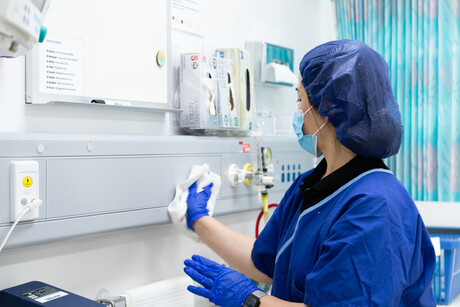
A well‑structured cleaning schedule keeps high‑risk surfaces safe and prevents gaps in hygiene. This guide explains how to build a cleaning timetable for healthcare facilities, specifying what to clean, how often, how and by whom. Follow these principles to maintain infection control and meet audit requirements.
**************************************************
Key Takeaways
- Identify surfaces and equipment (patient rooms, bathrooms, devices) and assign cleaning frequencies such as daily, between patients, spot cleans and periodic deep cleans.
- Detail methods for each task: cleaning followed by disinfection, appropriate detergents, colour‑coded cloths, correct dwell time and staff PPE.
- Include risk assessments, monitoring and record‑keeping to adjust the schedule as patient load, infection risks or regulations change.
**************************************************
What Should a Good Cleaning Schedule Include?
Drawing from RACGP guidelines and best practice standards, here’s what a comprehensive routine cleaning schedule for healthcare settings should detail:
1. Surfaces and Equipment to Be Cleaned
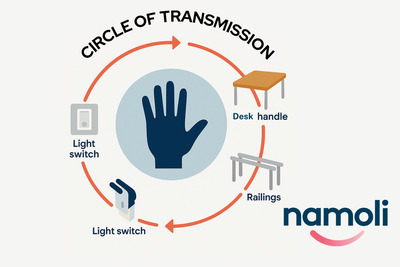
- Patient rooms: Beds, furnishings, doorknobs, light switches, countertops
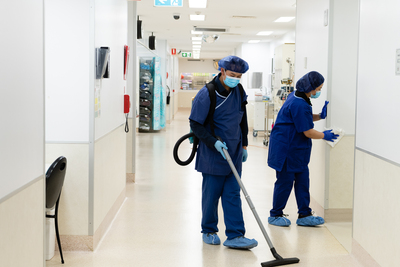
- Toilets and bathrooms: Minimum daily full cleaning and disinfection, with at least twice daily checks by facility staff or cleaners
- Waiting areas: Focused cleaning on high-touch surfaces like chairs, door handles, and magazines
-
Other areas: Reception desks, hallways, and administrative spaces tailored to usage patterns
2. Frequency of Cleaning
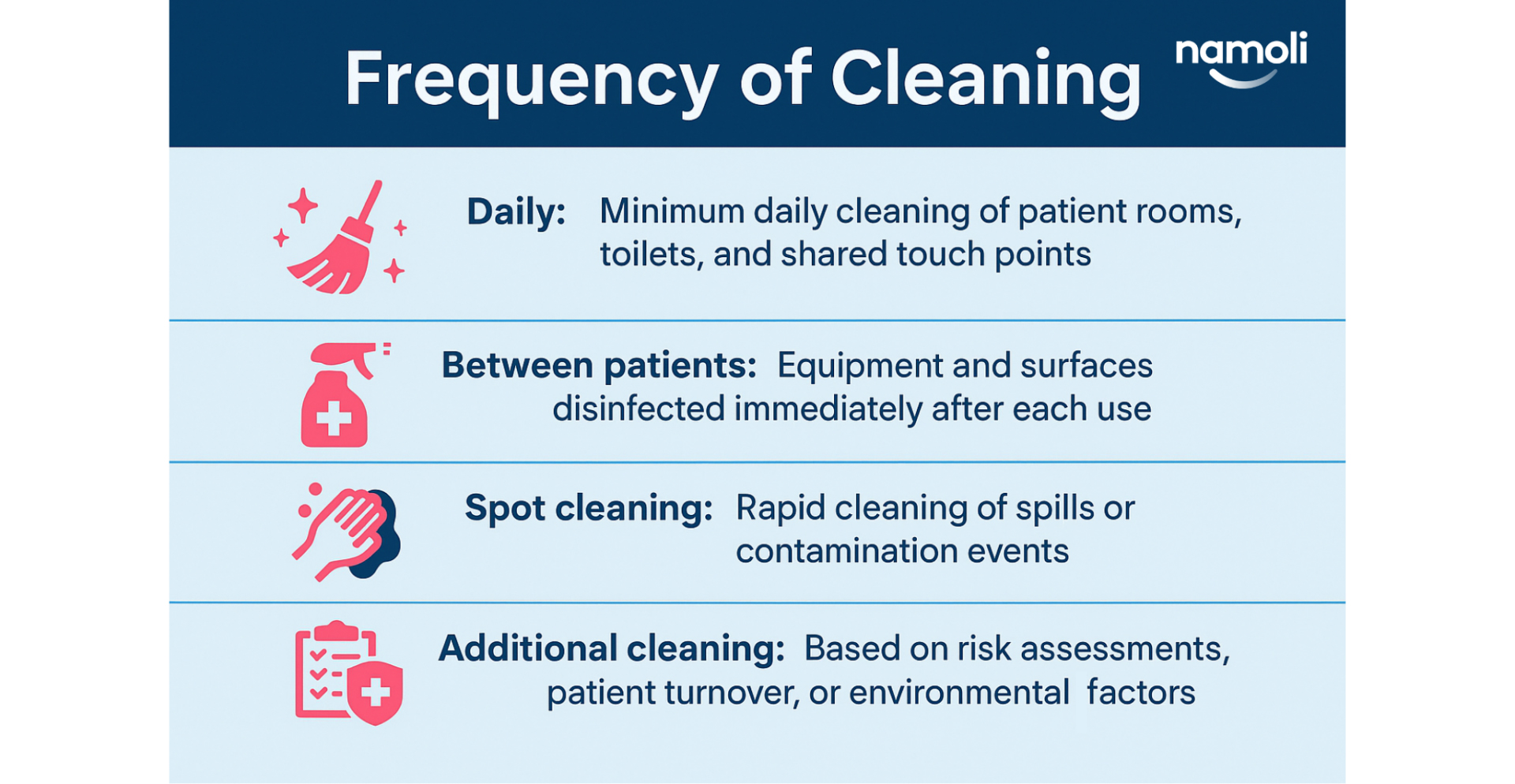
- Daily: Minimum daily cleaning of patient rooms, toilets, and shared touch points
- Between patients: Equipment and surfaces disinfected immediately after each use
- Spot cleaning: Rapid cleaning of spills or contamination events
-
Additional cleaning: Based on risk assessments, patient turnover, or environmental factors
Setting clear expectations for the frequency of cleaning ensures nothing is missed, even during busy times.
3. Cleaning Methods and Approved Products
- General cleaning: Using healthcare-grade neutral detergents to remove visible dirt and debris
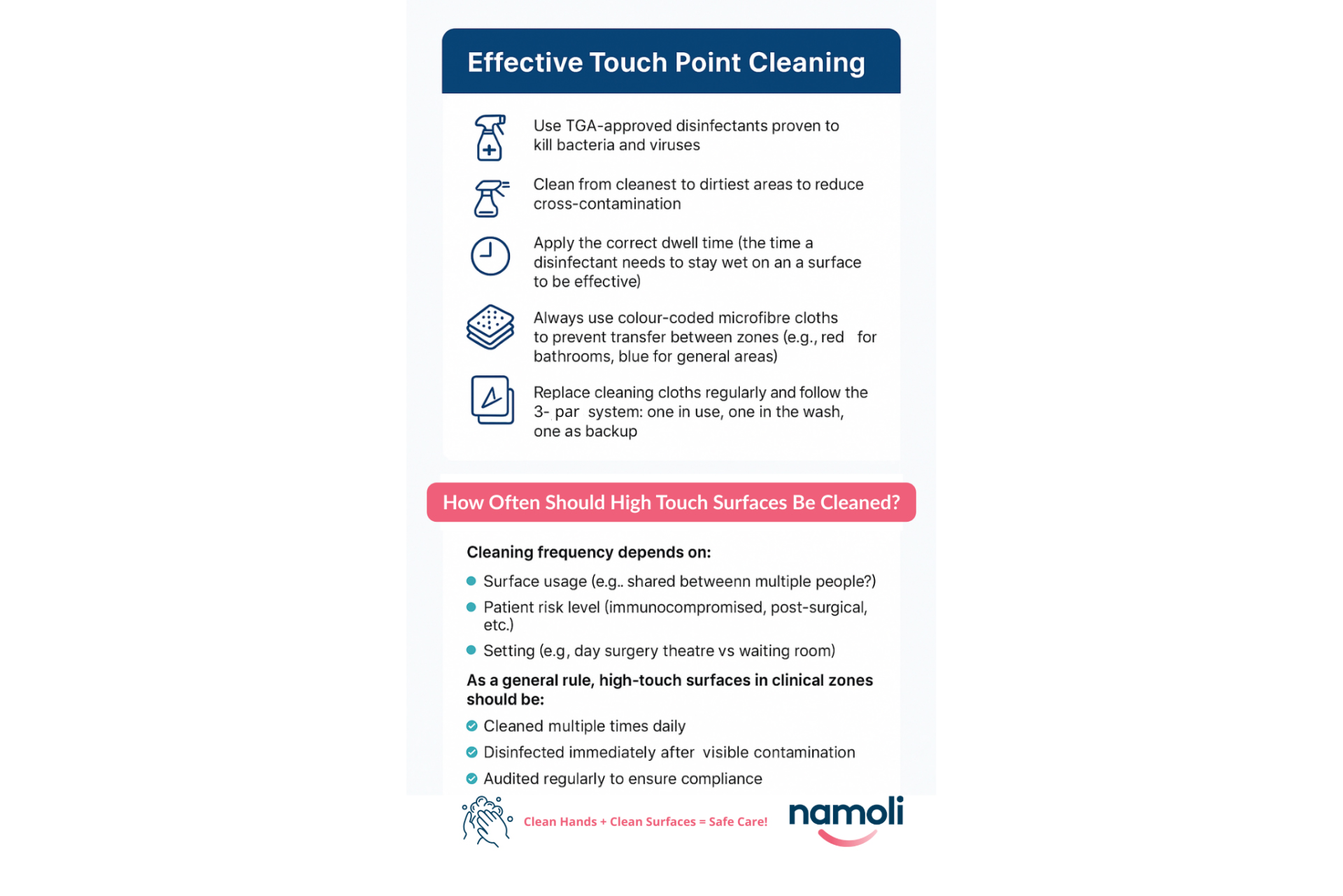
- Disinfection: Using TGA-approved disinfectants to kill pathogens effectively
-
Specialised equipment: Colour-coded cloths, mops, and zone-specific cleaning tools to prevent cross-contamination
Other Important Considerations for Effective Cleaning Schedules
- Immediate risk assessment: Regular environmental checks for patient safety risks
- Monitoring and evaluation: Ongoing audits and adjustments of schedules for effectiveness
-
Compliance: Strict adherence to Australian infection control regulations and healthcare standards
Why Standard Commercial Cleaning Isn’t Enough
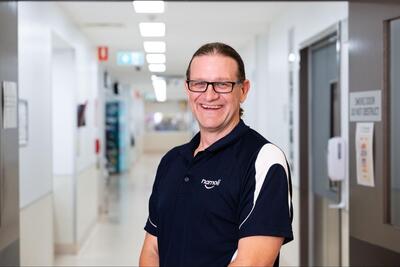
As explained by Mike Liddle, General Manager of Namoli Healthcare, healthcare cleaning requires a specialist approach. Unlike commercial cleaning, it must comply with infection control guidelines mandated by federal authorities and implemented by each facility.
General commercial cleaners may not understand how to avoid cross-contamination or apply zone-specific cleaning techniques, which is why partnering with specialist providers like Namoli is crucial.
Bio
How healthcare providers prevent infection
The spread of infection in the healthcare sector is a continuous challenge for operators, so what...
Helping to keep health care professionals hands-on
Aqium Gel is a Registered Medicine (AUST R 179333) hand sanitiser formulated with 70 percent w/w...
Keeping Infection Prevention Front of Mind – Every Day of the Year
Infection prevention is an ongoing commitment to safer care. Every day, healthcare professionals...