Helping to keep health care professionals hands-on

Health care professionals face unique occupational challenges, including an elevated risk of developing Occupational Skin Disease (OSD) due to frequent hand hygiene practices.[1] Among these, Occupational Contact Dermatitis (OCD) remains the most prevalent, accounting for approximately 90 percent of all OSD cases.[2]
OCD can be induced by repeated use of alcohol-based sanitiser which can negatively alter the skin barrier and dry out or irritate the skin.[3] Given that 17–50 percent of all nurses are affected by OCD,[1] it is essential that health care facilities select products that balance hygiene with maintenance of healthy skin.
Zero reported incidence of OCD amongst health care professionals with Aqium Gel
A recent retrospective audit conducted by Ego Pharmaceuticals found that since 2015, there has been zero reported incidence of OCD amongst health care professionals, from more than 7.6 million units of Aqium Gel supplied to health care facilities across Australia.[4] This record underscores the strong clinical acceptance of Aqium Gel and its ability to support compliance with infection control protocols — without compromising hand health.
Clinically proven to hydrate skin
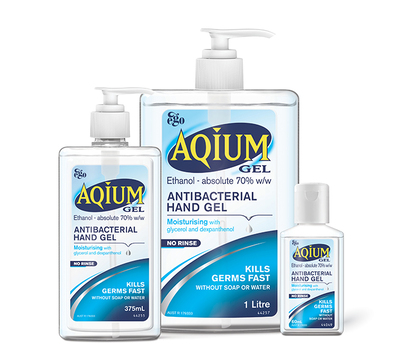
Aqium Gel is a Registered Medicine (AUST R 179333) hand sanitiser formulated with 70 percent w/w absolute ethanol for broad-spectrum antibacterial efficacy and enriched with moisturisers to help replenish lost hydration.
A clinical study commissioned by Ego Pharmaceuticals demonstrated that frequent application of Aqium Gel — approximately 20 times daily over two weeks, simulating typical hospital staff use — resulted in a 16 percent increase in skin hydration.[7] Importantly, the study found no major impact on skin pH and no negative effects on overall hand health, as confirmed by both physician and participant assessments.[7]
Protecting hands, supporting care
OCD can have both personal and economic consequences for health care professionals, including impaired quality of life, decreased productivity and even an inability to work.[1,5,6] For health care organisations, the associated burden includes medical costs, absenteeism, lost productivity and workers’ compensation claims. [1]
By helping to maintain skin barrier integrity through an effective moisturising system, Aqium Gel supports the ongoing hand health of nurses, carers and clinicians — allowing them to remain hands-on in delivering patient care.
Key benefits of Aqium Gel
- Registered Medicine (AUST R 179333)
- Enriched with moisturisers to replenish skin hydration
- Clinically proven to increase skin hydration by 16% in frequent-use settings[7]
- Quick drying for convenience in clinical environments
- 70% w/w absolute ethanol for proven antibacterial efficacy
- No major impact on skin pH, even with extended use[7]
- Zero reported incidence of OCD among health care professionals since 2015[1]
For tailored product information or to download the White Paper » click here
Our portal is specifically for health care professionals working in hospitals and aged care, with tailored product information for your area. To download the White Paper » click here
References
1. Higgins CL, Palmer AM, Cahill JL, Nixon RL. Occupational skin disease among Australian healthcare workers: a retrospective analysis from an occupational dermatology clinic, 1993–2014. Contact Dermatitis. 2016;75:213–222.
2. Mostosi C, Simonart T. Effectiveness of barrier creams against irritant contact dermatitis. Dermatol. 2016;232:353–362.
3. Jakasa I, Thyssen JP, Kezic S. The role of skin barrier in occupational contact dermatitis. Exp Dermatol. 2018;27:909–914.
4. Data held on file from retrospective audit of Aqium Gel adverse reactions from 2015-2025.
5. Lau MYZ, Burgess JA, Nixon R, Dharmage SC, Matheson MC. A review of the impact of occupational contact dermatitis on quality of life. J Allergy (Cairo). 2011;2011:1–12.
6. Smedley J, Williams S, Peel P, Pedersen K, on behalf of the Dermatitis Guideline Development Group. Management of occupational dermatitis in healthcare workers: a systematic review. Occup Environ Med. 2012;69:276–279.
7. Ego Pharmaceuticals commissioned external study. Aqium Gel was used by the participants 20 times ± 2 times daily over a 2 week period. Average increase in skin hydration (corneometer), average change in TEWL (Tewameter), average change in pH (skin pH meter). Physician and participant assessments. n=33
How healthcare providers prevent infection
The spread of infection in the healthcare sector is a continuous challenge for operators, so what...
Keeping Infection Prevention Front of Mind – Every Day of the Year
Infection prevention is an ongoing commitment to safer care. Every day, healthcare professionals...
The Challenge of Biofilms in Healthcare
Biofilms represent a formidable challenge in the ongoing battle against healthcare-associated...