"Pointless scans" to diagnose knee osteoarthritis may trigger inappropriate care, the Commission warns

On 12 November, the Australian Commission on Safety and Quality in Health Care published its ‘Atlas Focus Report: Osteoarthritis of the knee’ national data report, which examines MBS-subsidised knee imaging, hospitalisations for knee arthroscopy and hospitalisations for knee replacement surgery, for people aged 45 years and over.
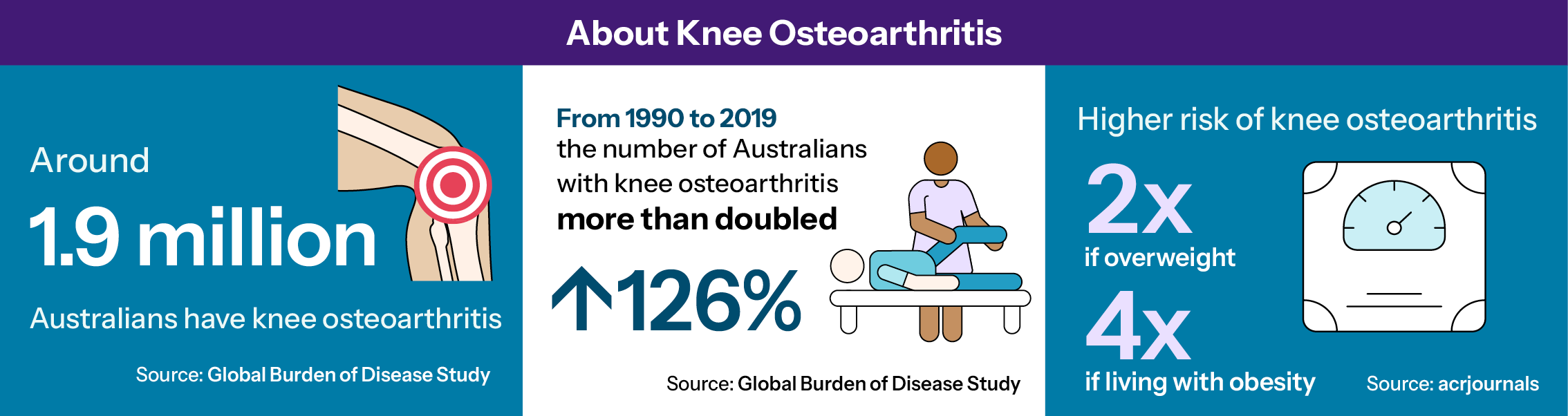
Osteoarthritis of the knee can cause inflammation in knee joints, leading to pain and disability, with around 1.9 million Australians living with it. A common condition, for most people who live with it, the diagnosis can be made with a history and examination and, unless they have severe and persistent pain that is affecting their daily life, knee replacement surgery is avoidable.
A substantial 83% increase in knee CT scans and a 26% increase in knee ultrasounds for people aged 45 years and over, in the five years to 2023–24, is revealed by the data, the Commission said. The Commission also noted that the report “showed an encouraging 50% reduction in knee arthroscopy rates in the 10-year period to 2023–24, in line with guideline recommendations against its use for uncomplicated osteoarthritis of the knee”.
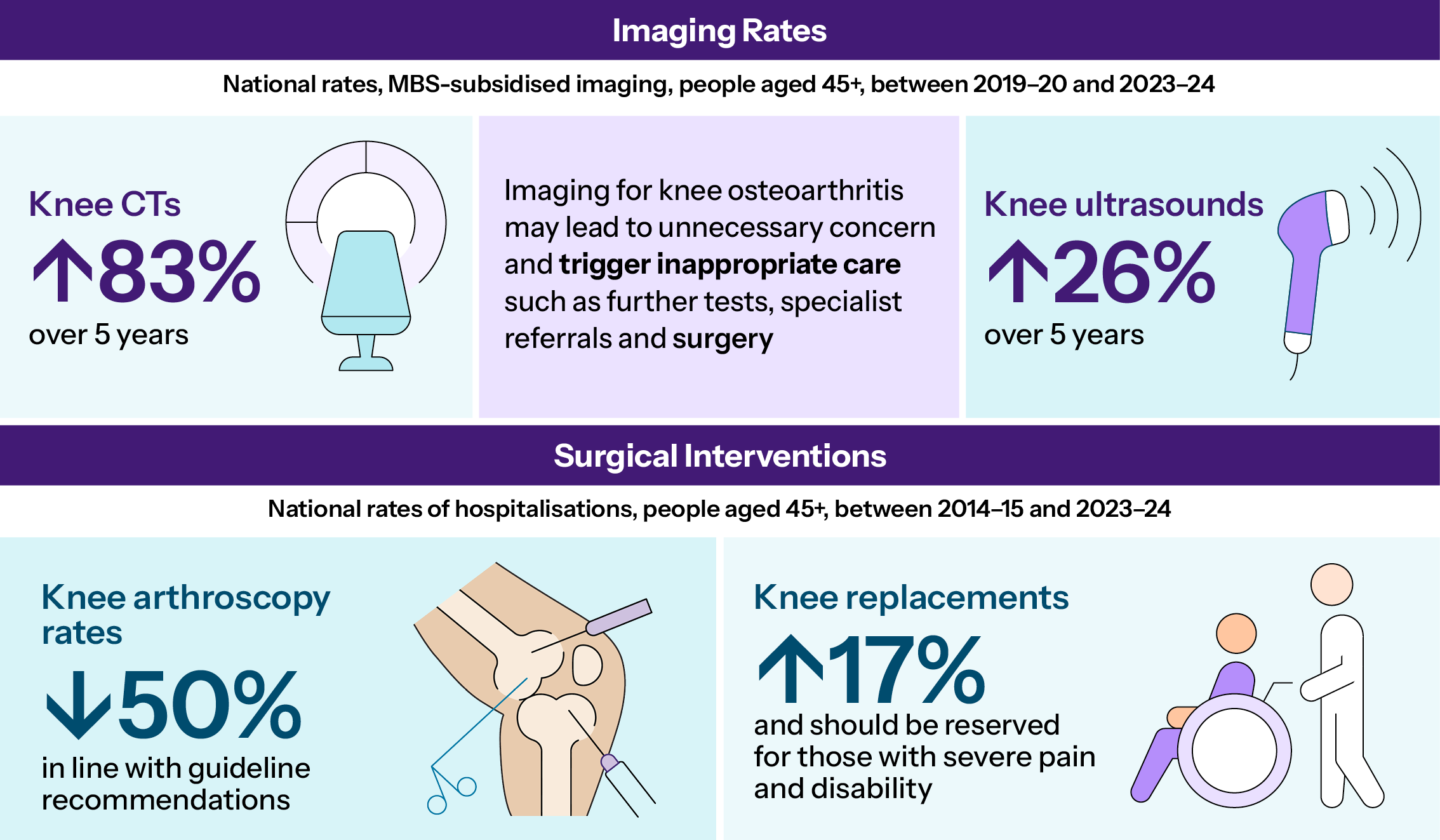
Meanwhile, knee replacement surgery, which should be reserved for people living with persistent severe pain and disability, rose 17% in the past decade. “For people with knee osteoarthritis, effective care starts with a good clinical assessment. A thorough history and examination tell you more than CT scans, ultrasounds, X-rays, MRIs or blood tests,” said Medical Advisor for the Commission and general practitioner Dr Phoebe Holdenson Kimura.
“We don’t recommend tests such as CT scans or ultrasounds for knee osteoarthritis as they offer little benefit and there is poor correlation between severity of symptoms and radiology findings. They can also lead to undue concern and inappropriate further tests, specialist referrals and surgery.
“Let’s get things right from the outset — current evidence shows that non-surgical interventions should always be first line, and are safe and beneficial. Knee joints are designed to be loaded and are nourished with movement,” Holdenson Kimura said.

The total annual cost of osteoarthritis in Australia is $4.3 billion, with unnecessary or low-value scans and treatments for knee osteoarthritis contributing to this, the Commission said. The Commission also said that more work is needed to change mindsets, as two-thirds of these people do not receive effective care such as education, exercise and weight management.
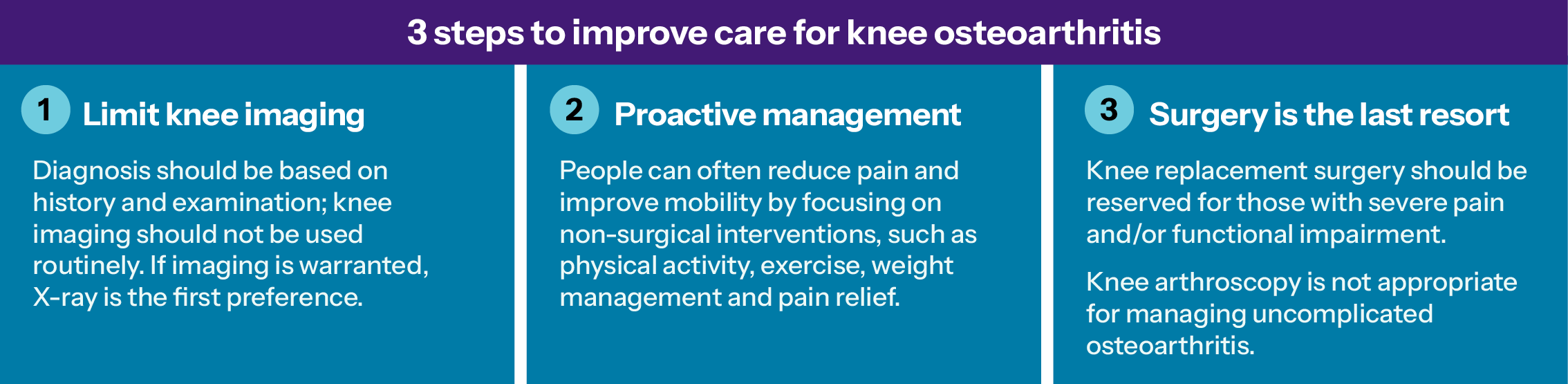
First released in 2017 to improve care for knee osteoarthritis and to reduce inappropriate interventions, the Commission’s Osteoarthritis of the Knee Clinical Care Standard was updated in 2024, encouraging patients to take control of their health and clinicians to avoid referring for unnecessary scans, surgical intervention or over-reliance on pain relief medicines. “Instead, it urges greater focus on supporting patients with weight management, nutrition, physical activity and exercise,” the Commission said.
You can find more information on the report at www.safetyandquality.gov.au/data-and-measurement/australian-atlas-healthcare-variation/atlas-focus-report-osteoarthritis-knee.
Oral care and the prevention of hospital-acquired pneumonia: new evidence for infection prevention and control practice
The HAPPEN randomised control trial involved 8870 patients across three Australian hospitals. Two...
"Hell in a handbasin": infection considerations of four handbasin design features
An Australian-led review has compared healthcare handbasin design guidelines across 39 countries...
Could this eco-friendly antimicrobial coating curb healthcare-associated infections?
The coating, made from Queensland agricultural waste, is part of a two-year trial in the ICU of...