When AI Wastes More Than a Patient's Time
By Dr Tim Ferris, Vice President, Healthcare Practice, InterSystems
Sunday, 01 November, 2026
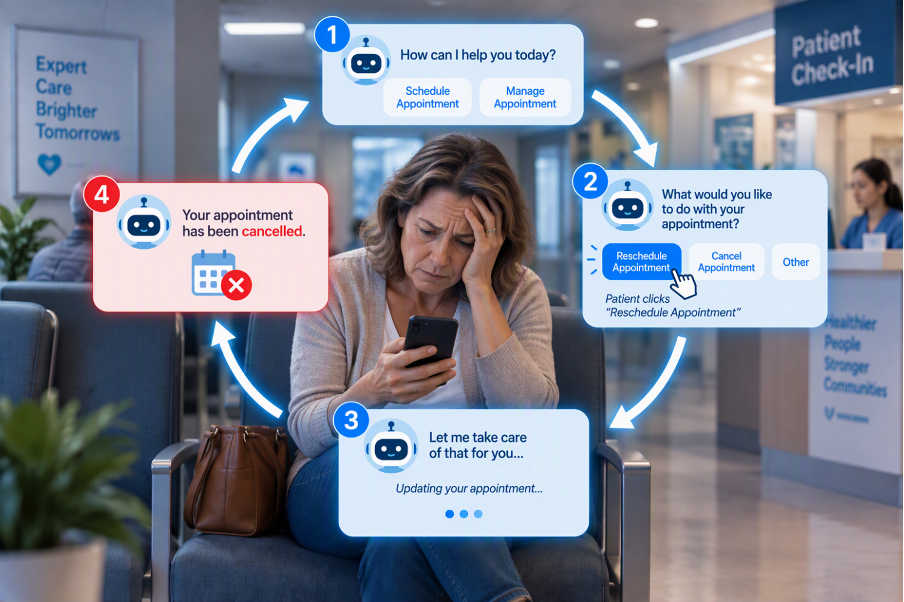
All my friend wanted was to change a medical appointment for an ailing relative. He was prepared to deal with the classic interactive voice response system we all know and love — “for billing, press one; for appointments, press two” — knowing that with a few presses of “0” and saying the word “operator” at increasingly higher volumes he would get to a real person eventually.
He was less prepared for AI’s new role in this interaction. For my friend, AI made his experience significantly worse.
Since the chatbots were also programmed as AI agents, each time he tried to change the appointment, the bots decided instead to cancel it, setting him back further from where he started.
So it wasn’t just a colossal waste of time; my friend was much worse off after having the AI system try to act on his behalf. After this experience, he was borderline nostalgic for the days of yelling “representative!” into the void.
In time, I suspect more than half of healthcare interactions will start with AI. I’m confident AI will make those experiences remarkably more productive and efficient. In the vast majority of cases, it already does.
When they aren’t, the result is more than wasted time. It’s distrust.
Why the AI Failed
After all, hearing what my friend went through, who could blame him for growing sceptical of AI’s place in healthcare?
So what could have prevented this? My friend’s engineering background offered him insight into what was happening. The bots’ answers seemed constrained. That was probably implemented as a safety precaution, but it meant they couldn’t make sense of a complex situation.
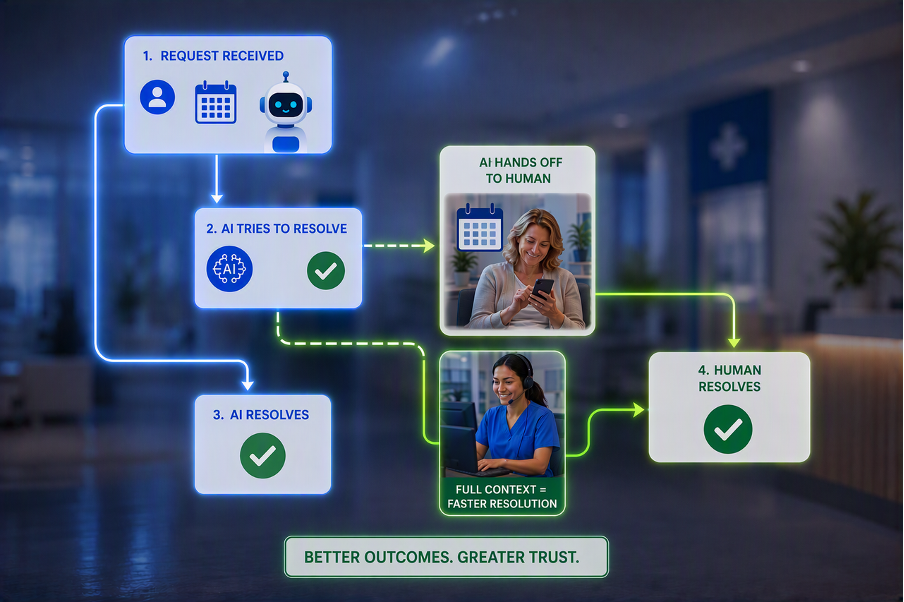
Maybe there are some edge cases that bots simply can’t address, at least for now. It’s necessary, therefore, to program a graceful off-ramp. My friend didn’t mind having to chat with a bot at the outset. The headache that followed would have been avoided had the bot, once it was out of its depth, been able to initiate a warm hand-off.
Because as we all know, there’s no better tonic in those exasperating moments than the words: “Let me connect you with someone who can help.”
The AI We Actually Need
The goal shouldn’t be to create a system that simply mirrors our previous one: An AI-enabled warm transfer can do far more than merely redirect a call. The human agent should receive a complete background summary, such as what the individual needed, prior efforts made, and the full dialogue record.
That frictionless shift transforms a frustrating obstacle into a reassuring showcase of AI-enabled healthcare.
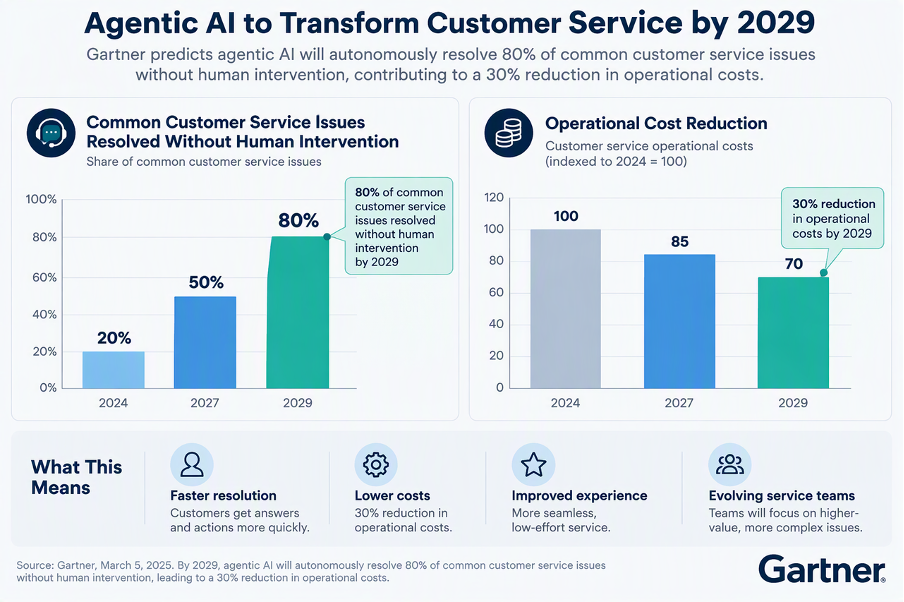
These agentic AI systems have their place, and again, they’re poised to do a world of good. Across all customer service inquiries, Gartner projects that by the end of the decade, 80 percent will be handled with AI, without the need for human intervention. That will be a win for both customers and providers, allowing simpler issues to be resolved faster and freeing provider resources to focus on the disabled, underserved, and complicated.
People are also quickly warming to the idea of using chatbots in all sorts of health-related contexts. A recent U.S. Gallup poll found that more than half of respondents turned to AI for health information before doctor visits, which I believe is a great example of patients taking a proactive approach to their healthcare journey.
But we need to remember that this growing confidence remains delicate. Every frustrating loop or misguided automated action does more than waste the user’s time, it undermines our progress.
Should individuals lose faith during these early stages, they’ll likely revert to familiar phone trees or shun digital tools entirely. The real danger of poorly executed AI extends well beyond an improperly cancelled visit; it sabotages the broader willingness of patients to accept solutions that could genuinely transform modern healthcare.
About the author
As Vice President, Healthcare Practice for InterSystems, Dr Tim Ferris brings decades of experience directing large-scale healthcare technology transformations and leading major physician organisations to drive better patient outcomes and enterprise efficiency.
Prior to joining InterSystems in February 2026, Dr Ferris served as President of Healthcare at Red Cell Partners, a technology incubator and investment firm. Previously, he was the National Director of Transformation at England’s National Health Service (NHS), as well as CEO and Chair of the Massachusetts General Physicians Organization and Senior Vice President for Population Health at Mass General Brigham.
A recognised leader in health IT, Dr Ferris’s advisory roles include multiple committees at the U.S. National Academy of Medicine and the health policy advisory board at the Stanford University School of Medicine. Dr Ferris trained in medicine and public health at Harvard University and continues to lecture at Harvard Business School and the Harvard T.H. Chan School of Public Health.
The healthcare transformation challenge: delivering more care with diminishing resources
Hospital + Healthcare spoke with Tony Mahony, Head of Healthcare & Emergency...
Beyond Disconnected EDC and eCOA: How AI and Connected Clinical Technology Improve the Patient and Site Experience
The opportunity is to create a connected clinical ecosystem where data, technology, and AI work...
Focus on Care Delivery Problems to Improve Productivity with AI
AI can enable meaningful productivity improvements if we focus on common care delivery problems,...