Oral care and the prevention of hospital-acquired pneumonia: new evidence for infection prevention and control practice
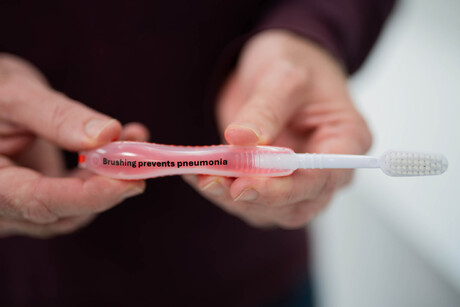
The HAPPEN randomised control trial involved 8870 patients across three Australian hospitals. Two members of the research team explain its findings.
Healthcare-associated infections (HAIs) remain a significant challenge for acute care hospitals, with considerable attention traditionally focused on bloodstream infections, surgical site infections and antimicrobial resistance. Yet one of the most common HAIs receives little attention: non-ventilator hospital acquired pneumonia (NV-HAP).1
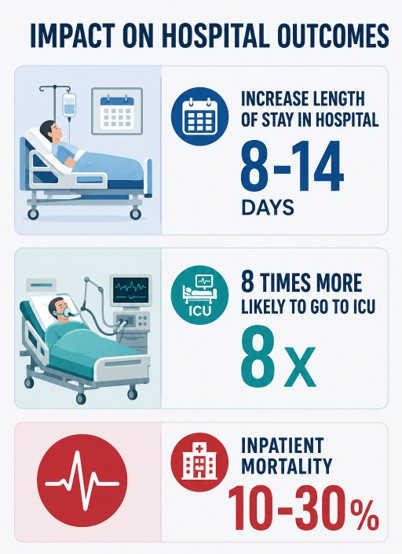
NV-HAP occurs in hospitalised patients who are not receiving mechanical ventilation and is associated with substantial increases to patient morbidity, mortality and healthcare costs. In fact, patients who develop NV-HAP may remain in hospital longer (commonly 8–14 days) and are eight times more likely to die during their admission.2 Despite this burden, NV-HAP is infrequently monitored, inconsistently reported and rarely targeted through formal infection prevention programs.
Recent findings from The Hospital Acquired Pneumonia PrevENtion (HAPPEN) Trial provide some of the strongest evidence to date that improving oral care can significantly reduce NV-HAP incidence in acute care settings.3
Why oral care matters
The oral cavity contains billions of microorganisms. During hospitalisation, oral health deteriorates due to illness, immobility, reduced self-care capacity, medication effects, dehydration and inadequate oral hygiene. These changes can promote bacterial colonisation of the teeth, gums and tongue.4 When oral secretions containing pathogenic bacteria are aspirated into the respiratory tract, pneumonia can develop. This mechanism is well-established and has led many guidelines to recommend oral care as part of pneumonia prevention strategies. However, until recently, high-quality randomised control trial evidence supporting these recommendations in non-ventilated hospital patients was limited.4
Research has consistently shown that oral care is frequently missed or inadequately performed in acute care settings. Common barriers include competing clinical priorities, limited staff knowledge, insufficient resources, lack of documentation and uncertainty regarding responsibility for oral care delivery.5, 6
The HAPPEN Trial
The HAPPEN Trial was designed to address these evidence gaps by evaluating whether an enhanced oral care intervention could reduce NV-HAP among hospitalised patients.3
Conducted across three Australian hospitals, the multicentre stepped-wedge cluster randomised trial involved nine in-patient medical wards. Eligible participants were adults admitted to participating wards for at least 48 hours. A total of 8870 patients were included in outcome analyses. It was the biggest trial undertaken to take.
Core components
The intervention consisted of three core components:
1. Oral care resources and maintenance
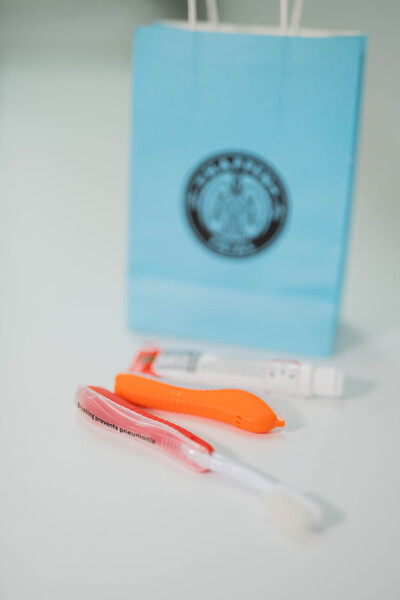
Patients admitted to intervention wards received toothbrushes, toothpaste and supporting educational materials. Patients were encouraged to undertake oral care (brushing of teeth, gum and tongue and/or dentures with fluoride toothpaste). Research nurses assisted with oral care where required.
2. Education
Patients and healthcare workers received education on the importance of oral care and its role in preventing NV-HAP. They were also provided access to resources, now located on a new website (www.happenstudy.com). This website also offers freely available educational resources, including instructional videos, practical guides, and implementation materials for hospital, clinical staff, infection control staff and patients.
3. Documentation, audit and feedback
Documentation of patient oral care was encouraged throughout the intervention. Regular audits of oral care documentation were undertaken, and feedback was provided to support practice improvement. Importantly, the intervention sought to facilitate and strengthen routine oral hygiene practices rather than introduce specialised equipment or advanced technologies.
Key findings
The primary outcome was NV-HAP incidence, defined using established European Centre for Disease Prevention and Control criteria.
Among 8870 analysed patients, 78 cases of NV-HAP were identified. Forty-six cases occurred during the control phase and 32 during the intervention phase. Statistical analysis demonstrated that exposure to the intervention reduced NV-HAP risk by approximately 60%, with a hazard ratio of 0.40 (95% CI 0.19-0.82).
The intervention also had a substantial impact on oral care practice. Documented completion of oral care protocols increased from approximately 16% before implementation to 62% following intervention rollout with oral care being undertaken on average twice daily.
The findings are clinically significant because they demonstrate that improving oral care behaviour can translate into meaningful reductions in HAIs.
Implications for infection prevention programs
The HAPPEN Trial has several important implications for infection prevention and control professionals.
NV-HAP deserves greater attention
While hospitals routinely monitor many HAIs, NV-HAP often remains invisible within surveillance systems. The demonstrated burden of disease suggests that hospitals should consider incorporating NV-HAP into quality improvement and patient safety initiatives.
Oral care should be viewed as infection prevention
Oral care is frequently regarded as a nursing comfort measure. However, the HAPPEN findings reinforce that oral care is also an infection prevention intervention with measurable clinical outcomes. Hospitals may benefit from reframing oral care as a core patient safety activity rather than an optional aspect of personal hygiene.
Implementation matters
The HAPPEN intervention was not dependent on expensive technology. Instead, success relied on education, product availability, patient engagement and regular documentation and feedback. The study demonstrates that relatively simple implementation strategies can improve adherence and produce meaningful clinical benefits.
Multidisciplinary collaboration is essential
Success required collaboration between nursing teams, infection prevention professionals, research educators, hospital administrators and consumers. Sustainable implementation is likely to require similar multidisciplinary partnerships.
**************************************************
Practical considerations for healthcare facilities
For organisations seeking to strengthen NV-HAP prevention efforts, several practical lessons emerge:
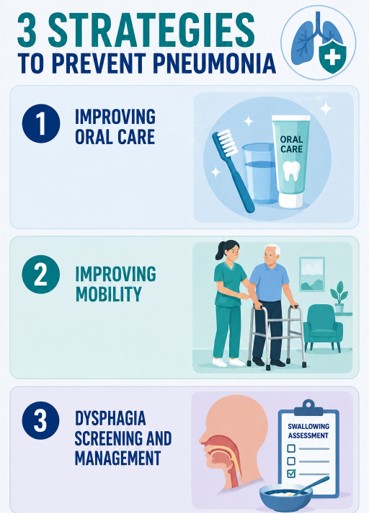
- Ensure oral care products are readily available.
- Incorporate oral care into patient admission processes and documentation throughout a patient’s admission.
- Educate staff about links between oral care and pneumonia prevention.
- Support patients who require assistance with oral hygiene.
- Audit oral care delivery and provide regular feedback.
- Consider oral care compliance as a patient safety indicator.
Importantly, oral care interventions are low-cost, scalable and compatible with existing clinical workflows.
**************************************************
Looking ahead
The HAPPEN Trial provides robust evidence supporting enhanced oral care as an effective strategy for reducing NV-HAP in hospitalised patients. The findings contribute significantly to an area where high-quality evidence has historically been limited.
Future work will further explore implementation, patient experiences and cost-effectiveness outcomes. However, the clinical message is already clear: improving oral care can reduce pneumonia risk among hospitalised patients.
As healthcare systems continue to seek effective, scalable and cost-conscious approaches to infection prevention, oral care represents an intervention that is simple, practical and supported by strong emerging evidence. In an era increasingly focused on high-tech healthcare solutions, the HAPPEN Trial demonstrates that basic nursing care remains one of the most powerful tools available for improving patient safety.
You can learn more about the study at www.happenstudy.com.


1. Munro SC, Baker D, Giuliano KK, et al. Nonventilator hospital-acquired pneumonia: a call to action. Infect Control Hosp Epidemiol. 2021;42(8):991–996. doi: 10.1017/ice.2021.239
2. Chalker MA, Browne K, Russo PL, Mitchell BG. Impact of non-ventilator healthcare-associated pneumonia on mortality and additional length of stay in adults admitted to an acute care hospital: a systematic review. J Hosp Infect. 2026;170:122–138. doi: 10.1016/j.jhin.2026.01.013
3. White NM, Russo PL, Matterson G, et al. Effectiveness of oral care for the prevention of non-ventilator hospital-acquired pneumonia (HAPPEN): a multicentre, stepped-wedge, cluster-randomised trial in Australia. Lancet Infect Dis. 2026;26(10):1022–1030. doi: 10.1016/S1473-3099(26)00235-5
3. Ehrenzeller S, Klompas M. Association between daily toothbrushing and hospital-acquired pneumonia: a systematic review and meta-analysis. JAMA Intern Med. 2024;184(2):131–142. doi: 10.1001/jamainternmed.2023.6638
5. Tehan P, Browne K, Matterson G et al. Oral care practices and hospital-acquired pneumonia prevention: a national survey of Australian nurses. Infection, Disease & Health, 2024;29:212–217. doi: 10.1016/j.idh.2024.04.006
6. Rawson H, Dawson S, Madhuvu A, et al. Nurses’ experiences of providing oral care to hospitalised patients: a qualitative study. Infect Dis Health. 2025;30(4):343–352. doi: 10.1016/j.idh.2025.05.002
"Hell in a handbasin": infection considerations of four handbasin design features
An Australian-led review has compared healthcare handbasin design guidelines across 39 countries...
Could this eco-friendly antimicrobial coating curb healthcare-associated infections?
The coating, made from Queensland agricultural waste, is part of a two-year trial in the ICU of...
Preserving paediatric data beyond the point of care
A clinician-led, research-driven program for the care of babies and children seeks to securely...