Women Make Up Majority of Allied Health Workers
Tuesday, 10 September, 2013
A new report released by the Australian Institute of Health and Welfare (AIHW) shows women make up the majority of allied health workers.
The report, Allied health workforce 2012, provides information on the demographic and employment characteristics of 11 allied health professions: occupational therapists, medical radiation practitioners, optometrists, chiropractors, Chinese medicine practitioners, podiatrists, osteopaths and Aboriginal and Torres Strait Islander health practitioners.
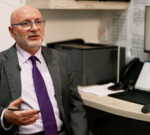
AIHW spokesperson Dr Adrian Webster said it was the first report on allied health practitioners since the introduction of the new National Registration and Accreditation Scheme for these professions.
It shows around 127,000 allied health practitioners were registered in 2012, with women making up more of these practitioners than men.
"More women than men were employed in 9 of the 11 professions, the exceptions being chiropractors and optometrists," Dr Webster said. "Almost 9 in 10 occupational therapists were women, and women accounted for 8 in 10 employed psychologists, 7 in 10 physiotherapists and 6 in 10 pharmacists," Dr Webster said.
Nearly two-thirds of all registered allied health practitioners in Australia are psychologists, pharmacists or physiotherapists. Psychologists made up the largest proportion of registered allied health practitioners (23%), followed by pharmacists (21%), physiotherapists (19%) and occupational therapists (11%).
The full-time equivalent (FTE) rate of employed practitioners (FTE number per 100,000 population) rose slightly between 2011 and 2012 for all professions except optometrists, where the FTE rate was steady.
The report shows that the average employed allied health professional is aged between 37 and 47, and has a working week varying from about 32 hours for Chinese medicine practitioners to 40 hours for Aboriginal and Torres Strait Islander health practitioners. He said there were 265 registered Aboriginal and Torres Strait Islander allied health practitioners in 2012, 127 of whom worked in Aboriginal health services
Better questions, clearer choices: putting the person at the centre of continence support
Better continence support begins before a product is chosen. It begins with better questions,...
A Day in the Life of a rural generalist anaesthetist and men's mental health advocate
Dr Hayden Cain is a rural generalist anaesthetist who has a particular interest in men's...
Rapid-response discharge model targets bed block
As health ministers call for urgent federal action on bed block, this NSW home and community care...