A Day in the Life of a rural generalist anaesthetist and men's mental health advocate
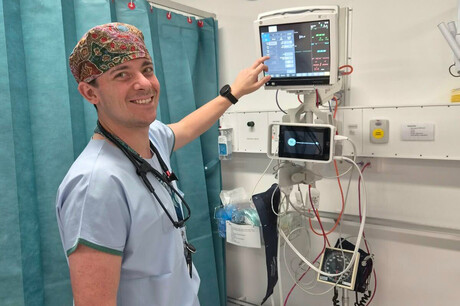
Dr Hayden Cain is a rural generalist anaesthetist whose career has taken him from major tertiary hospitals to some of Australia’s most remote communities, including the Torres Strait. That breadth of experience now shapes a practice that spans anaesthetics, general practice, emergency care and a wide range of clinical interests, from sports and musculoskeletal medicine to palliative care and minor procedures. He also has a particular interest in men’s health and mental health, including how clinicians can better support men to open up, stay engaged and follow through with care. One of his regular Thursdays in Lithgow is a good example of just how varied rural generalist medicine can be. Here’s a day in his life.
05:00 Thursday starts early, with the drive to Lithgow. The travel is part of working across rural and regional communities, and it gives me a couple of hours to think through the day ahead. Of course, in rural medicine, what is on the list at 5 am and what actually happens can be two very different things.
07:30 Once I arrive, I prepare for theatre and review the operating list. The mix varies from week to week and can include ophthalmology, general surgery, dental procedures and gynaecology. Before we start, I need to understand each patient’s history, the planned procedure and anything that may affect their anaesthetic care.
08:00 Most of the working day is spent running the anaesthetic list. At the same time, I am on call for anaesthetic issues and for patients on the hospital wards, so there is always the possibility of being pulled away. I also generally supervise a final-year medical student. A lot of the teaching happens at the bedside, which is one of the benefits of rural practice. Students get to see how clinical decision-making works across different settings rather than within one narrow part of medicine.
11:30 I’m called away from theatre to the labour ward to insert an epidural, before returning to the operating list.
16:00 Once theatre finishes, I review the following week’s cases and identify patients who may need a pre-anaesthetic assessment before their procedure. This is also a window to review any urgent patients in the ED or on the wards before moving into the GP part of my day.
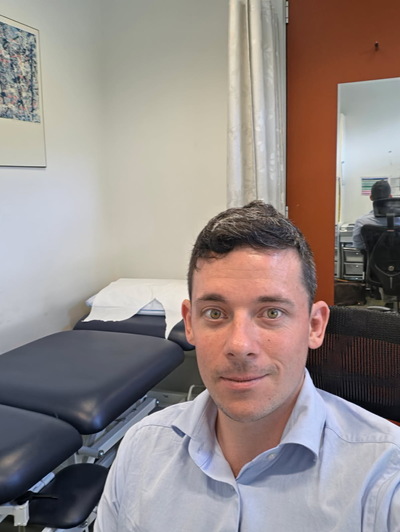
16:30 My evening GP session can cover almost anything: removing a skin lesion, preparing a mental health care plan, following up a patient after a hospital admission or completing a pre-anaesthetic review. This part of the day is a good reminder that the reason someone presents is not always the whole story. In general practice, especially where there is continuity over time, you have the opportunity to notice changes, ask a little more and create space for concerns that may not come up straight away. That is particularly relevant in men’s health.
Many men may make it through the door of primary care, but building the trust that keeps them connected to care can be another challenge. Sometimes the presenting concern is only part of the picture, and distress or other issues may be underplayed, left unsaid or emerge indirectly. It is an area I care deeply about, and one I have explored through my work with Movember’s Men in Mind for Primary Care. The program is designed to give health professionals practical, evidence-informed tools to strengthen conversations with men, recognise when concerns may be hiding in plain sight and support continued engagement with care. (You can learn more about the program at meninmind.movember.com/primarycare.)
19:00 After general practice, the day can shift back to inpatient medicine. After general practice, I return to the hospital to admit patients, including people presenting through the ED with anything from heart failure to pneumonia, as well as patients transferring back from other hospitals following procedures such as hip replacements and coronary bypass surgery. One of the realities of rural generalism is that you often see patients across different stages of their care. The boundaries between hospital medicine, general practice and follow-up are much less rigid.
22:00 Some Thursdays finish around 9 pm. Others do not. On this particular day, I am called back into the hospital for a resuscitation in the ED. By the time I leave again, it is around 11.30 pm.
It has been a long day, but also one that captures why rural generalist medicine is difficult to describe with a single job title. In the space of one Thursday, I have worked across anaesthesia, obstetrics, teaching, general practice, mental health, inpatient medicine and emergency care. And the next Thursday will almost certainly look different again.
Rapid-response discharge model targets bed block
As health ministers call for urgent federal action on bed block, this NSW home and community care...
Doctors' inaugural Aged Care Report Card reveals "failures" across the sector
That hospital patient days used by people eligible and waiting for residential aged care...
Top 5 insights into why older Australians stop eating well at home
A national survey of 2496 Australians aged 65+, in-depth interviews and focus groups with 234,...