In Conversation with Australasian Institute of Digital Health CEO Anja Nikolic
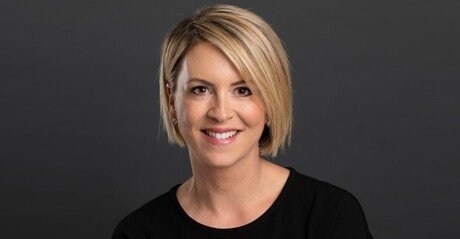
Hospital + Healthcare sits down with Australasian Institute of Digital Health CEO Anja Nikolic to talk allied health, My Health Record, ChatGPT, and why closing the gap in digital health maturity is vital to the future of health care.
When the CEO of the Australasian Institute of Digital Health (AIDH), Anja Nikolic, was working in allied health, her fruitless attempts to accelerate digital health uptake exposed a major systemic issue.
Back then, Nikolic was GM of membership for the Australian Physiotherapy Association and had been exploring the role digital health could play in solving the sector’s pain-points.
When her efforts reached a dead-end, she realised there was a lack of digital health maturity — and how much that mattered.
“We held forums, we spoke with experts and tried to do all sorts of things to pre-empt where this was going for the profession. And it just went nowhere,” she told Hospital + Healthcare. “The level of involvement of allied health in anything to do with digital health was really limited. It wasn’t at all on the radar of government or leadership of any sort.
“It really exposed the discrepancy in digital health maturity across the spectrum. And I remember thinking, there will be a reckoning here at some point, because allied health accounts for 300,000 workers. It’s a large segment of our healthcare workforce — too large to overlook when it comes to transforming the overall healthcare sector.”
There’s an app for that
For Nikolic, the underutilisation of digital technologies in allied health is a missed opportunity to solve wicked problems.
She claims there are few the current marketplace can’t address and that even solely deploying My Health Record would be transformative.
“Something that has long frustrated allied health is the challenge around multidisciplinary teamwork when caring for patients with complex needs. The ability for pathology to work seamlessly with general practice and exercise physiology when helping a patient with type 2 diabetes, for example.
“It is not an easy thing to share information and data in seamless ways and the traditional method of fax and email raises security concerns. So, there are also lots of gains to be made with remote patient monitoring, the enablement of virtual care and better telehealth — but without that digital health maturity, none of these technologies will be embraced.”
Literacy is also key
Beyond allied health, Nikolic says there is great potential for AI in diagnostics, but that clinicians must be privy to the types of technologies — and output — they can trust.
“Take ChatGPT. We know that, on various occasions, patients have used it to successfully diagnose themselves before doctors have been able. But let’s wager that by saying, for every correct diagnosis, there may be many more misdiagnoses.
“ChatGPT is a very general technology and isn’t trained with specialist health data. So as a vehicle, it might get you from A to B, but it would need an experienced driver to get you there safely. Even then, there are too many variables to guarantee accuracy or safety.”
Systemic barriers
While no single factor is to blame for the lack of digital maturity or literacy in health care, Nikolic claims cumbersome workloads could be a barrier.
“People don’t always have the time or inclination to try new things when they already have so much on their plate,” she said.
Compounding that, she says there are few logical pathways to develop digital health expertise for those already in the workforce.
“There are dedicated masters programs, but that’s a fairly unrealistic pathway for someone who works fulltime. For many, it’s something they learn on the job, sporadically, or fall into accidentally.”
Closing the gap
In her current role with AIDH, Anja is committed to closing the gap in digital health maturity, claiming the issue extends far beyond allied health.
“It’s a widespread issue and the disparity is growing. You have people for whom digital health has been part of their professional journey for 20–30 years, and others for whom it’s still an emerging thing.
“At the AIDH we’ve been trying to lift the bar for everyone, so that we can transform the healthcare system to the level we know is available if digital health is harnessed the way it should be.
“That’s why we are hoping to develop a Clinical Informatics Fellowship, to funnel people into digital health leadership.”
Anja, who has been in the role since March 2024, says this differs from how the AIDH has traditionally done things.
“Historically we have been focused on the digital health expert. And we are still very much here for these people — they are our core membership.
“But I think we really need to cast the net much wider in terms of our policy thinking, thought leadership, and education, and target those who don’t yet have that literacy, because if we don’t the gap will widen.”
In this pursuit, Anja says she is grateful of her early experience in allied health.
“It has served as a poignant reminder of why that gap matters,” she concluded.
Back pain hybrid model aims to ease hospital bed pressure
The Back@Home trial will test a hybrid virtual and in-person care model for adults 65 years and...
The healthcare dog must wag the AI tail
Artificial intelligence can strengthen health care, but only when we focus on patient care rather...
Opinion: The growing risk of AI-driven self-diagnosis in breast health
A Sydney-based consultant breast surgeon outlines the risks of AI in the context of breast cancer...