Food waste in Australian hospitals and aged care homes — can AI help?

After working in hospitals, an Australian researcher set out to understand how hospitals and aged care homes can combat food waste — including with the help of AI.
Due to the complex interaction between patient and resident needs, staff behaviour and attitudes, foodservice operations, food safety regulations and nutrition policies, Australian hospitals and residential aged care homes generate substantial amounts of food waste — posing a significant challenge to building a national sustainable food system.
Now, a researcher from The University of Queensland (UQ) has drawn on his experience working in hospitals and identified — together with a UQ colleague and researchers from Adelaide and Monash universities — what he sees as the path to driving food savings in health care.
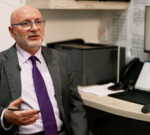
“My motivation comes from working in hospitals and seeing plates and plates of food go out to patients and then come back completely untouched and going into the bin,” said Dr Nathan Cook from UQ’s School of Human Movement and Nutrition Sciences. “It baffled me — not just from a sustainability point of view, but the labour and time that goes into preparing food that ends up in landfill.
“As well as providing cost savings, reducing food waste cuts greenhouse gas emissions, lowers disposal costs, and supports a more sustainable healthcare system that is better for patients by providing the food they want to eat,” Cook added, noting that up to half of all hospital waste can be food, while 23–50% of food prepared in residential aged care homes is discarded.
Given the financial pressures on the health sector and environmental imperative to reduce food waste, Cook set out to research how to measure and manage it more sustainably. “Auditing is the first step towards finding solutions, but most food waste audits in hospitals are manual and ad hoc, often relying on students during placements,” Cook said.
“That might happen twice a year in hospitals and almost never in residential aged care,” he added. “If we measure food waste, we can identify what’s being left behind and why patients are rejecting it.” The data can help guide simple changes, Cook said. According to Cook, such simple changes include offering flexible portion sizes, more meal choices or adjusting mealtimes, which have the potential to reduce waste without compromising care.
Technology can also help, Cook believes, pointing to new AI-based technologies that have offered a promising audit solution — enabling fast, accurate measurement without disrupting food service operations. “These tools can photograph and analyse plates before and after meals, providing data on what was eaten and what was left, without adding extra work to kitchen staff,” Cook said.
International case studies have shown that changes implemented after audits in hospitals led to savings, including about $200,000 a year at one facility in food purchasing alone, with further savings in reduced preparation and disposal. “I am keen to see auditing innovation adopted in Australia,” Cook said.
“It would allow us to measure, change, and measure again, creating a cycle of improvement that benefits everyone,” he added. “By starting with measurement, we can identify small, realistic steps to have a big impact and help achieve Australia’s national target to halve food waste by 2030.”
**************************************************
You can read more about Cook et al.’s perspective on managing food waste in Australian hospitals and residential aged care homes at doi.org/10.3389/fnut.2025.1715385.
**************************************************
Back pain hybrid model aims to ease hospital bed pressure
The Back@Home trial will test a hybrid virtual and in-person care model for adults 65 years and...
The healthcare dog must wag the AI tail
Artificial intelligence can strengthen health care, but only when we focus on patient care rather...
Opinion: The growing risk of AI-driven self-diagnosis in breast health
A Sydney-based consultant breast surgeon outlines the risks of AI in the context of breast cancer...