Opinion: Why the role of continuous glucose monitors is expanding rapidly in primary health care
Australian hospitals and healthcare organisations are adopting digital solutions, including artificial intelligence, at pace to streamline clinical workflows and enable more connected and personalised health care.
Continuous glucose monitoring (CGM) is a good example. For people living with type 1 diabetes, CGM is already well established, but as access and awareness expand, its role for people living with type 2 diabetes is also becoming increasingly relevant to primary care.
The RACGP’s current guidance1 recommends that CGM be considered for people living with type 2 diabetes using intensive insulin therapy, subject to individual circumstances and available resources. It also recognises the value of CGM in providing greater insight into glycaemic variability and patterns.
That creates an important shift for clinicians because CGM is no longer simply a specialist technology that sits within endocrinology. As its use for people living with type 2 diabetes grows, clinical specialists will increasingly discuss where CGM is appropriate, how the data should be interpreted and how this information can inform ongoing healthcare management.
From specialist to mainstream care
One of the biggest benefits CGM brings to mainstream health care for people living with diabetes is the move from periodic measurement to continuous visibility.
HbA1c remains an important measure of longer-term glycaemic control, but it cannot show a clinician what happened between patient appointments. CGM can reveal patterns that may otherwise remain hidden: recurring post-meal rises, overnight changes, periods of hypoglycaemia or the relationship between glucose, physical activity and treatment.
For a clinician, the value is not in having hundreds of additional readings to review. It is in being able to identify the information that can change the conversation with a patient. That requires a shift in mindset. The clinical view now needs to focus on what CGM data can reveal about a patient at a deeper level and how their healthcare management should change to improve their overall health outcomes.
Primary care needs CGM that works around the patient
Bringing CGM into mainstream care also means recognising that technology needs to work for the realities of people’s lives. For example, how quickly a sensor begins providing information matters. Alerts need to be useful rather than simply frequent. Configurable high and low alerts, predictive information and options to manage notifications can help clinicians and patients tailor the CGM to individual needs and avoid unnecessary alarm fatigue.
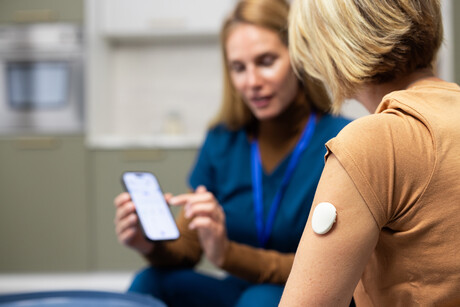
Importantly, data needs to be accessible beyond the patient’s phone. The ability to share glucose information remotely and generate reports showing patterns over time can support clinical conversations.
None of these features is the objective in itself. Their value comes from whether they make it easier for a person to use a CGM consistently and for a clinician to turn the resulting information into appropriate action.
The opportunity is bigger than glucose monitoring
Medical researchers are now increasingly recognising the value of CGM in primary health care.
A 2024 umbrella review published in Archives of Public Health, which consolidated findings from 31 systematic reviews, examined the effectiveness of CGM compared with conventional blood glucose monitoring or usual care. Its analysis found an average HbA1c reduction of 0.40 percentage points and a six percentage-point increase in time in range associated with CGM use. The researchers assessed the overall certainty of evidence as moderate, while noting that further research is needed to better understand patient experience and acceptability.2
Studies like this demonstrate how continuous glucose information has the potential to move conversations beyond managing an established diagnosis and towards understanding how everyday behaviours affect metabolic health.
The next phase is integration
Australia now has an opportunity to take a more holistic approach to CGM.
For people living with type 1 diabetes, the evidence demonstrates that CGM can support both glucose management and the lived experience of managing the condition.
For people living with type 2 diabetes, an expanding evidence base is demonstrating benefits when CGM is incorporated into primary care.
Emerging research is also exploring whether the technology could have a role even earlier, helping people understand metabolic risk.
As CGM reaches more people living with diabetes, primary care will have an increasingly important role in making sure the technology is used appropriately, supported effectively and connected to the broader healthcare journey.

1. Royal Australian College of General Practitioners. Management of type 2 diabetes: use of technology in type 2 diabetes management. Accessed November 2, 2026. https://www.racgp.org.au/clinical-resources/clinical-guidelines/key-racgp-guidelines/view-all-racgp-guidelines/management-of-type-2-diabetes/use-of-technology-in-type-2-diabetes-management
2. Tan YY, Suan E, Koh GCH, et al. Effectiveness of continuous glucose monitoring in patient management of type 2 diabetes mellitus: an umbrella review of systematic reviews from 2011 to 2024. Arch Public Health. 2024;82:231. doi: 10.1186/s13690-024-01459-2
Winning healthcare equipment tenders: why having the best product is no longer enough
Government and healthcare organisations are increasingly assessing equipment suppliers against a...
Burnout in health care isn't an 80/20 problem: why a more balanced view is needed and what it means for you and your workplace
A psychologist with a PhD focusing on doctors' health challenges the 80/20 burnout narrative,...
Top 4 lessons from an ICAC NSW Health employee investigation
The NSW corruption watchdog said this investigation highlights recruitment, procurement,...