The cost of not cleaning: how to reduce infections and save money
When budgets tighten, hospital cleaning is often seen as a cost to cut. However, evidence from the CLEEN trial shows the opposite: investing in environmental cleaning improves patient outcomes while reducing overall healthcare costs, as two members of the research team explain.
Healthcare-associated infections (HAIs) affect approximately one in 10 hospitalised patients and contribute substantially to patient morbidity, mortality and healthcare expenditure. Environmental contamination has long been recognised as an important source of transmission, yet uncertainty often exists regarding who is responsible for cleaning shared medical equipment and how frequently it should occur.
To address this challenge, researchers undertook the CLeaning and EnhancEd DisiNfection (CLEEN) trial in a large Australian public hospital.1 Rather than relying solely on clinical staff to clean shared equipment between patient use, the study introduced a dedicated cleaning model focused on equipment frequently used across multiple patients.
The intervention was intentionally simple
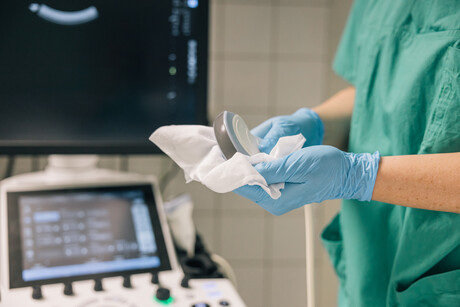
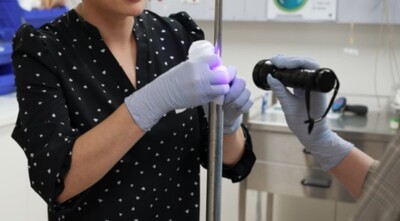
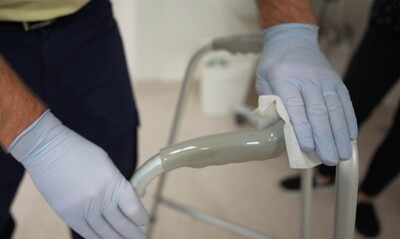
Additional cleaning staff were allocated dedicated time (three hours, each ward, each weekday) to clean shared medical equipment, including blood pressure monitors, infusion pumps, wheelchairs and commodes. This was supported by education, regular auditing of cleaning performance and feedback to staff. Importantly, no new technology was required. Existing hospital-grade disinfectant wipes were used throughout the program.
The project addressed a common challenge faced by hospitals worldwide: when responsibility for cleaning shared equipment is unclear, cleaning often does not occur.
Before the intervention, only 18% of audited equipment was found to have been adequately cleaned. Following implementation, cleaning thoroughness increased to more than 56%, demonstrating that dedicated accountability and resourcing can dramatically improve performance.
Better cleaning translated into better patient outcomes
The study involved more than 5000 patients across 10 hospital wards. Researchers found HAI prevalence fell from 17.3% during the control period to 12.0% following implementation. After statistical adjustment, the intervention was associated with a 34.5% relative reduction in HAIs. Significant reductions were also observed across major infection categories including bloodstream infections, pneumonias, urinary tract infections and surgical site infections.
The financial results were equally compelling
A subsequent economic evaluation found that for every 1000 patients, the enhanced cleaning program prevented approximately 30 HAIs and released 384 hospital bed days. Rather than increasing costs, the intervention reduced them. Total hospital costs were estimated to be more than AU$640,000 lower per 1000 patients compared with usual practice. The analysis found a 90.5% probability that the intervention would save money.2
Challenging the common perception
These findings challenge the common perception that environmental cleaning is primarily a consumable or workforce expense.
For healthcare leaders, the CLEEN trial demonstrates that reducing cleaning budgets may inadvertently increase costs elsewhere through longer hospital stays, increased antibiotic use, additional treatments and reduced bed availability. Conversely, investing in cleaning can improve patient safety while supporting hospital efficiency.
At a time when hospitals are striving to maximise value, environmental cleaning should be viewed as an area where strategic investment can deliver measurable returns for both patients and health services.
You can learn more about the study at cleenstudy.com.
1. Browne, K., White, N., Tehan, P., Russo, P. L., Amin, M., Stewardson, A. J., et al. A randomised controlled trial investigating the effect of improving the cleaning and disinfection of shared medical equipment on healthcare-associated infections: the CLEaning and Enhanced disiNfection (CLEEN) study. Trials. 2023;24(1): 133. doi: 10.1186/s13063-023-07144-z
2. Brain, D., Sivapragasam, N., Browne, K., White, N. M., Russo, P. L., Cheng, A. C., et al. Economic evaluation of enhanced cleaning and disinfection of shared medical equipment. JAMA Network Open. 2025;8(4): e258565. doi: 10.1001/jamanetworkopen.2025.8565


Fear of cancer recurrence clinical pathway
The evidence-based clinical pathway for identifying and managing fear of cancer recurrence...
Eureka Prize-winning discovery affects one in four women worldwide
This year's Australian Infectious Diseases Research Centre Eureka Prize for Infectious...
5-year study uncovers "hidden order" in brains under psilocybin
Australia is the first country in the world to legalise psilocybin for treatment-resistant...