Pathways to proof: could this transcranial treatment ease chronic pain?
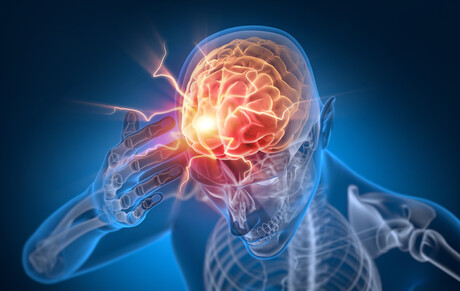
Australian researchers have published a ‘roadmap’ to prove clinical efficacy for transcranial direct current stimulation — a treatment for chronic pain that has shown promise as being safe and non-invasive.
Chronic pain, which is pain lasting for three months or more, affects more than 1.5 billion people worldwide. Transcranial direct current stimulation, or tDCS, has shown promise as a safe and non-invasive treatment. However, as Australian researchers explain, more evidence is required.
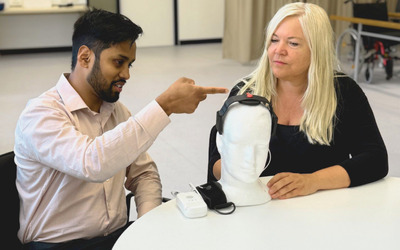
“tDCS involves a low-intensity current being applied across the scalp and has gained attention for being a potential chronic pain treatment as it’s non-invasive, well-tolerated and can be delivered at home,” said Dr Nahian Chowdhury, NeuRA (Neuroscience Research Australia) Research Fellow at the Centre for Pain IMPACT and UNSW Sydney. “However, its efficacy is also clinically inconclusive at present.”
To strengthen the evidence base and help understand the full therapeutic potential of tDCS for chronic pain, a ‘two-part roadmap’ has been developed — and published this year as a paper in the journal PAIN (doi: 10.1097/j.pain.0000000000003893).
“Firstly, we need to improve the methodological quality of the trials,” said Professor Sylvia Gustin, Co-director of the Centre for Pain IMPACT and UNSW Sydney. “Secondly, we need to look at optimal doses of electrical current, including comparing standard approaches with alternatives.”
In proving whether tDCS truly works, Chowdhury said research that compares tDCS to a sham, or ‘pretend’, treatment is “crucial”; researchers having found that keeping participants ‘blind’ in tDCS studies needs extra care. This is because, if you keep asking people how it feels during the session, the real stimulation can feel different to the sham, making it easier to guess which one they’re getting.
“We found this is a weak point in some studies, so we need to test other sham methods, such as using a topical cream to reduce sensation in both groups so the experiences feel more similar,” Chowdhury said. “We also found that in some cases research had looked at groups of individuals with different pain conditions, which will impact response to tDCS and means analyses don’t accurately reflect treatment efficacy for any specific condition.”
Determining doses and studying specific pain have also been identified as areas in need of attention — researchers having found that many trials may not have delivered an optimal tDCS ‘dose’ to give people the best chance of pain relief.
Also, for different types of pain, it is believed that stimulation settings — like duration, intensity and number of sessions — may need to be rechecked and tailored. Gustin said: “Future trials should look at the intensity of the treatment, the focality — or area being targeted — and electrode placement.”
On the value of their PAIN roadmap, Chowdhury, who specialises in non-invasive brain stimulation for pain treatment, believes it is the next step in investigations into the potential of tDCS as a chronic pain treatment. “The paths we’ve laid out in this roadmap need to be completed before we can assess definitive efficacy of this treatment for chronic pain,” Chowdhury said.
Chowdhury and Gustin intend to test the new approaches outlined in their roadmap. This includes improved electrode placement, with a focus on home-based tDCS that is simple and practical for people to use.
“We are at the forefront of developing novel home-based tDCS approaches for chronic pain, including cutting-edge electrode montages, so everyone in Australia can access safe and effective treatment in their own homes,” Gustin said.
**************************************************
A novel home-based tDCS montage for neuropathic pain after spinal cord injury has also been developed by the Centre for Pain IMPACT team, who will recruit 200 people with spinal cord injury neuropathic pain across Australia to take part in a clinical trial supported by the Medical Research Future Fund. Interested individuals can register their interest at www.neurorecoveryresearch.com/neurostim-trial.
**************************************************
"Hell in a handbasin": infection considerations of four handbasin design features
An Australian-led review has compared healthcare handbasin design guidelines across 39 countries...
Could this eco-friendly antimicrobial coating curb healthcare-associated infections?
The coating, made from Queensland agricultural waste, is part of a two-year trial in the ICU of...
Preserving paediatric data beyond the point of care
A clinician-led, research-driven program for the care of babies and children seeks to securely...