Have Australian researchers discovered the secret to treating sepsis?
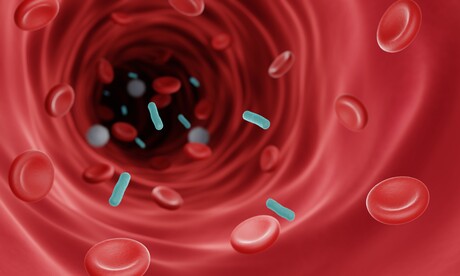
Affecting millions of hospitalised patients across the world each year, sepsis occurs when the body’s immune response to an infection attacks and injures its own tissues and organs. Now, after promising results from a Phase 2 clinical trial in China of a sepsis drug candidate, Griffith University researchers are looking to progress to a Phase 3 trial; the drug of which, in the words of one of its co-developers — Distinguished Professor Mark von Itzstein AO — is believed to hold the potential for “saving millions of lives”.
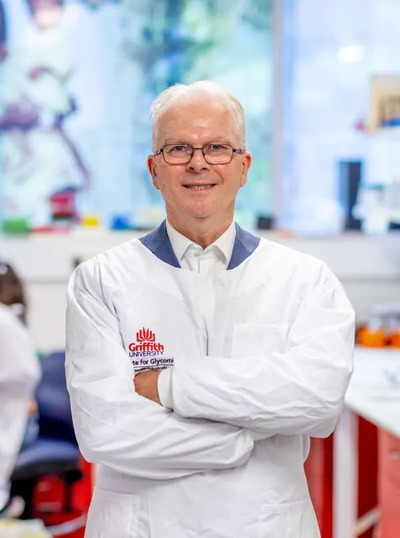
The drug, STC3141, is carbohydrate-based and was developed by von Itzstein and his team from Griffith’s Institute for Biomedicine and Glycomics, and Professor Christopher Parish and his team at the Australian National University. “The trial met the key endpoints to indicate the drug candidate was successful in reducing sepsis in humans,” von Itzstein said.
Administered as an infusion via a cannula, STC3141 was found to counteract a significant biological molecule release phenomenon, which occurred in the body during the course of sepsis — the small-molecule experimental drug serving as a potential treatment for sepsis by reversing organ damage.
The Phase 2 trial was conducted by Grand Pharmaceutical Group Limited (Grand Pharma) and involved 180 patients with sepsis. Grand Pharma would now look to progress to a Phase 3 trial, to continue testing the efficacy of the treatment and, von Itzstein said, with the hope that: “we could see the treatment reach the market in a handful [of] years, potentially saving millions of lives”.
"Hell in a handbasin": infection considerations of four handbasin design features
An Australian-led review has compared healthcare handbasin design guidelines across 39 countries...
Could this eco-friendly antimicrobial coating curb healthcare-associated infections?
The coating, made from Queensland agricultural waste, is part of a two-year trial in the ICU of...
Preserving paediatric data beyond the point of care
A clinician-led, research-driven program for the care of babies and children seeks to securely...