Could this tailored heart pump transform care for half of heart failure patients?
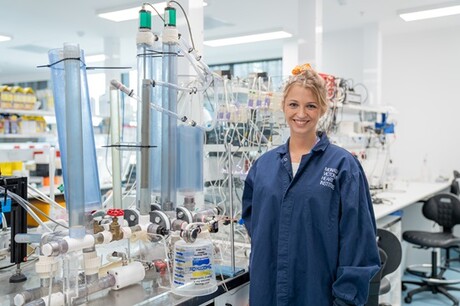
Half of the 64 million people living with heart failure are left with only medication or palliative care, having no access to heart pump treatments. Now, a heart pump is being developed by Monash engineers that could offer these patients the mechanical support they’ve never had.
“This major heart failure condition, known as HFpEF, has no dedicated mechanical circulatory support, leaving over half of all heart failure patients without a mechanical support option”, said Nina Langer — who as part of her PhD program in mechanical engineering at Monash University investigated how existing heart pumps could be adapted for HFpEF patients, to help drive innovation in next-generation devices and patient care.
“Most of these patients have a heart that’s stiff, with thickened walls and a smaller ventricle. This means standard ventricular assist devices don’t fit well — and can even cause harm,” Langer said.
Getting hands-on with a purpose-built test rig during her research, Langer designed a high-tech plumbing system with pipes, pumps and valves, which allowed her to simulate cardiovascular conditions, test modifications to existing devices and make real-time adjustments.
A paper published open access (doi: 10.1007/s10439-024-03585-y) in Annals of Biomedical Engineering, on which Langer was the lead author, suggests a heart pump designed specifically for HFpEF could provide a bridge to transplant — keeping patients alive while they wait for a donor heart or even serving as a long-term solution for those without other options.
By improving blood flow and alleviating the strain on the heart, the Monash study suggests the heart pump design could address the unique challenges of this condition. The study’s findings, Monash said, are contributing to the development of the first mechanical circulatory support device for HFpEF patients, which is now being developed by the largest cardiovascular device program in the country — the Monash-led Artificial Heart Frontiers Program (AHFP).
“The results underscore the need for dedicated heart pumps designed for this patient group, rather than repurposing devices developed for other types of heart failure,” Langer said. “A dedicated pump could transform care for millions, offering a new lease on life for those currently left with few options.”
On Langer’s contribution, one of her PhD supervisors and Co-Director of the AHFP, Professor Shaun Gregory, said: “Nina’s high-quality and translational research captures the unmet need for novel, targeted mechanical circulatory support for the largest cohort of patients with heart failure — over half of patients fall into the HFpEF category. While we’ve known of this unmet need for some time, this new study points to a clearer device development pathway.”
To further explore the adaptations of existing heart pumps and to help engineers and clinicians push the limits of innovation in the field, Langer also developed a computational model that was experimentally validated in collaboration with MIT (Massachusetts Institute of Technology).
Could this eco-friendly antimicrobial coating curb healthcare-associated infections?
The coating, made from Queensland agricultural waste, is part of a two-year trial in the ICU of...
Preserving paediatric data beyond the point of care
A clinician-led, research-driven program for the care of babies and children seeks to securely...
Nurse-led infection control training program
A healthcare protective solutions supplier has targeted infection prevention gaps in hospitals...