UQ Researchers Working on Vaccine Against Strep Throat
Monday, 30 June, 2014

 Researchers are one step closer to developing a safe vaccine against strep throat, which is responsible for more than 700 million infections and 500,000 deaths each year.
A study by an international team, including scientists from The University of Queensland, has shed new light on how Group A Streptococcus (strep) bacteria resists the human immune system.
The research could eventually lead to the development of a safe vaccine against strep throat, necrotising fasciitis (flesh-eating disease) and rheumatic heart disease.
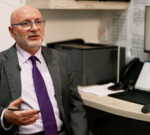
UQ School of Chemistry and Molecular Biosciences researcher and co-lead author of the study, Dr Jason Cole, said previous efforts to develop a strep throat vaccine had resulted in immune system reactions that caused other diseases such as rheumatic fever and heart damage.
“We have discovered genes that make up the cell wall of the strep bacteria, which is composed mainly of the group A carbohydrate or GAC,” he said.
The group A carbohydrate was previously thought to play a largely structural role in the bacteria cell walls.
“We have now confirmed that it actually plays a critical role in how the bacteria resist the immune response.
“This may trigger diseases such as rheumatic heart disease, which has hindered the development of a safe vaccine.
“Based on this information, we are now able to produce a modified group A carbohydrate for further vaccine studies, avoiding previous safety concerns associated with a strep vaccine."
The study, published online in Cell Host & Microbe, was led by Professor Victor Nizet of the University of California, San Diego (UCSD).
UQ researchers led by Professor Mark Walker, from the School of Chemistry and Molecular Biosciences, in collaboration with Emory University and UCSD in the United States, are now undertaking further pre-clinical testing of the modified vaccine.
Professor Walker said the pre-clinical trials were designed to demonstrate that the vaccine was safe and effective before proceeding to human clinical trials.
The research received funding from the UCSD Program in Excellence in Glycosciences, the Australian National Health and Medical Research Council, the Wellcome Trust and the Netherlands Organization for Scientific Research
Better questions, clearer choices: putting the person at the centre of continence support
Better continence support begins before a product is chosen. It begins with better questions,...
A Day in the Life of a rural generalist anaesthetist and men's mental health advocate
Dr Hayden Cain is a rural generalist anaesthetist who has a particular interest in men's...
Rapid-response discharge model targets bed block
As health ministers call for urgent federal action on bed block, this NSW home and community care...