New Epilepsy Treatment for Melbourne's Brain Hub
Thursday, 02 July, 2015
Australians suffering from focal epilepsy will soon have access to a new treatment, thanks to Melbourne’s Swinburne University. The Magnetoencephalography scanner or MEG located at the university’s Brain Imaging Centre is the only one of its kind in the Southern Hemisphere, and offers patients a non-invasive method for pinpointing the centre of seizure activity in the brain.
Forty per cent of epilepsy patients in Australia experience focal seizures, which are believed to originate in one area of the brain and therefore respond well to surgery. In order to prepare for surgery, patients are required to have a number of temporary electrodes placed directly onto the brain by the neurosurgeon. This is a costly, time consuming and potentially complicated procedure.
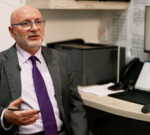
“At the moment surgical treatment for focal epilepsy is a very time consuming process. Often, it requires many kinds of different imaging tests,” Professor David Liley from Swinburne’s Brain and Psychological Sciences Centre says.
“Typically, to see which area of the brain is affected a surgeon needs to implant a number of temporary electrodes directly onto the patient’s brain, which can be costly, time-consuming and presents risk of further complications.
“MEG is a different and better way of doing this. The advantage of using MEG is that it measures the incredibly weak magnetic fields produced by the active brain, but is completely non-invasive.
Australian researchers have made great strides in the field of epilepsy research, with Melbourne being the hub of activity. University of Melbourne researchers Prof Sam Berkovic and Prof Ingrid Scheffer won the 2014 Prime Minister’s Science Prize for their work on the genetic origins of epilepsy. The Bionics Institute is working on a collaboration with St Vincent’s hospital to treat certain strains of epilepsy using a brain implant.
Better questions, clearer choices: putting the person at the centre of continence support
Better continence support begins before a product is chosen. It begins with better questions,...
A Day in the Life of a rural generalist anaesthetist and men's mental health advocate
Dr Hayden Cain is a rural generalist anaesthetist who has a particular interest in men's...
Rapid-response discharge model targets bed block
As health ministers call for urgent federal action on bed block, this NSW home and community care...