A palliative care nurse on why good intentions aren't enough
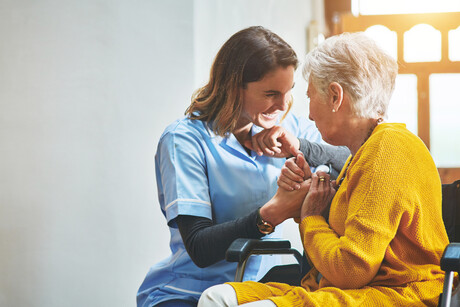
A nurse practitioner and home care provider’s Palliative Care Project Lead sets out why the Support at Home End-of-Life Pathway matters and some best practice perspectives on delivering it.
I still remember being told a story about a care worker watching a daughter apologise to her dying mother.
She wasn’t apologising for anything she had done wrong. She was apologising because she thought she had failed her by not being able to keep her at home.
Her mother had wanted, very clearly, to die in her own bed. But the family was exhausted, frightened and overwhelmed by symptoms they did not understand. Pain had escalated. Breathing had changed. Panic had set in. Like so many families, they had reached a point where calling an ambulance felt like the only safe option.
As a palliative care clinician, that story has stayed with me — not because hospital care was wrong, but because the crisis itself may have been avoidable with the right support earlier.
For many Australians, the wish to remain at home at the end of life is deeply personal. Home represents familiarity, dignity, autonomy and connection. Yet wishing to die at home and being supported to do so safely are very different things.
Good home-based palliative care is not simply about delivering services into a house. It is about building confidence around the person and their family before crisis occurs. It means having clear goals of care, practical planning, skilled symptom management, responsive escalation pathways and a workforce that understands not only what to do clinically, but how to support people emotionally through uncertainty.
Historically, this has been one of the greatest challenges in community palliative care. Families are often willing, but they are frequently underprepared and under-resourced. Care workers may be compassionate, but without adequate palliative-care training they can feel uncertain. Systems may exist, but they are not always timely or coordinated enough when someone deteriorates quickly.
This is why the Support at Home End-of-Life Pathway matters.
For older Australians who wish to remain at home during the final stage of life, this pathway offers a meaningful shift — dedicated funding, faster access to supports and greater flexibility to respond to changing needs. It creates more scope to put the right care around patients and families when time matters most.
But funding, while essential, is only one part of the equation.
In practice, the real question is whether the people delivering care at home feel prepared for what families need. Strengthening palliative care means more than making services available; it means building confidence and capability across the whole care team.
This includes investing in practical palliative care education for care workers, care managers and clinical leads, and drawing on existing Commonwealth-funded programs in advance-care planning and palliative-care training. The focus has been on the things that matter most in real situations: communication, recognising symptoms early, understanding escalation and helping care workers feel more confident supporting people nearing the end of life.
None of this is about expecting home care staff to become specialist palliative care clinicians. It is about making sure they are better equipped to notice subtle deterioration, recognise red flags, raise concerns earlier and play their part in comfort-focused care.
That shift matters.
Often, the difference between a family feeling abandoned and a family feeling supported is not a major intervention. It is a prepared care worker recognising terminal restlessness, a care manager checking that anticipatory planning is in place or an after-hours staff member calmly talking a family through what to expect overnight.
I have seen how this can change a family’s experience. People who felt alone can begin to feel more capable. Some hospital transfers that once seemed inevitable can be avoided. Most importantly, care is more likely to stay aligned with what matters most to the person and those around them.
For me, genuinely good end-of-life care is not defined by whether death happens at home or elsewhere. It is defined by whether the person’s goals, comfort and dignity were genuinely prioritised — and whether families felt supported enough to carry those wishes through.
That daughter’s apology in the lounge room has stayed with me because it represented something I believe our health and aged care systems must do better: we must stop leaving families to mistake system gaps for personal failure.
As clinicians, providers and referrers, our responsibility is not simply to ask people where they want to die. It is to build the systems, skills and supports that make those choices genuinely possible.
Good palliative care at home at its best, brings together clinical expertise, preparation, partnership and compassion in the place people know best — home.

Top 5 insights into why older Australians stop eating well at home
A national survey of 2496 Australians aged 65+, in-depth interviews and focus groups with 234,...
Doctors' inaugural Aged Care Report Card reveals "failures" across the sector
That hospital patient days used by people eligible and waiting for residential aged care...
The case for proactive aged care assessments
Proactive aged care assessments have the potential to reframe aging from a series of emergencies...