A Day in the Life of a social worker specialising in FASD
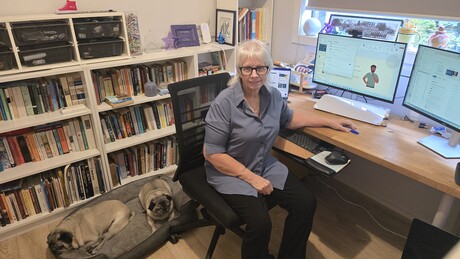
Prue Walker is a social worker specialising in Fetal Alcohol Spectrum Disorder (FASD), a lifelong neurodevelopmental condition caused by prenatal alcohol exposure, estimated to affect between 1% and 3.5% of people in Australia. Prue works as Clinical Coordinator of FASDConnect at Monash Children’s Hospital, supporting early recognition and assessment of children in out-of-home care, and also runs a private practice providing consultation, training and resources for families, carers and professionals. Across both roles, her work focuses on translating diagnosis into practical support, helping families and systems recognise and respond to FASD more effectively. Here’s a day in her life.
07:00 I am woken by my two senior pugs, Albert and Nell, who are very clear that breakfast is the first priority of the day. I get up, feed them, and start getting ready.
07:30 It is a wintry day, but the sun is out, so I load the pugs into the car, pick up a takeaway coffee and take them to the park for a 15-minute stroll. They will be spending most of the day asleep.
08:00 Back home, I put on a podcast while having breakfast and do The Age cryptic crossword. I enjoy a slow start to the day, but check the diary so I know when I need to shift into work mode.
08:45 Today, I’m working from home, so moving into my office means it’s time to switch on. I have ADHD, and while I wish I was the sort of person who planned each day with a neat checklist, I am not. I rely on practical systems instead: reminders, flagged emails, admin support and a morning computer reset. I often have browser tabs, draft emails and half-finished documents open from the day before. Closing them down when I am fresh helps me see what still needs attention, tie up loose ends and refocus. Sometimes the answer to something I was stuck on the day before is suddenly obvious.
09:15 My first session is with a behaviour support practitioner seeking advice about a young person with FASD. We talk through what the diagnostic report tells us about the young person’s brain function and capacity. Although they present as verbally competent, their everyday functioning is much younger than their chronological age. The focus shifts from responding after things go wrong to planning around missing skills, reducing demands and using environmental supports. After the session, I edit the AI transcript and send it through with links to relevant online resources.
11:00 I meet online with permanent carers whose child has recently received a diagnosis of FASD. Parents and carers often come with a mix of relief, grief, exhaustion and uncertainty. For this family, the diagnosis is not unexpected, but it still comes with a sense of shock. I share a plain-language summary of the diagnostic report that they can adapt for the child’s teachers. We focus on one daily challenge — getting dressed in the morning — and unpack what might be contributing to difficult starts to the day. I suggest a few simple strategies and offer to run a session with the school to explain the child’s profile.
12:30 I take a break for lunch, check the letterbox, feed the fish and encourage the dogs to stretch. I do the Sudoku over lunch, which gives my brain a reset. I also have a Google alert set for FASD research, and there is a new article on FASD and language development that I’d like to share with my Monash team. Part of my work involves staying across emerging evidence and translating it into practice. A new article may inform a training slide, family resource, blog post or clinical discussion.
13:15 I’m attending an upcoming conference where I have been asked to speak about FASD in adults as part of a panel. I make notes on the running sheet and send slides back to the organiser. FASD is often unrecognised among adults, which can be a major barrier to successful engagement in programs such as substance use treatment.
14:00 I meet online with my admin worker. We talk through upcoming training dates, registrations, invoices, certificates, resource links and follow-up emails. I also have a couple of enquiries about individualised training. Having external support, and being accountable to the systems I have set up, helps me stay focused.
15:00 Across the week, I combine private practice with my role at FASDConnect at Monash Children’s Hospital. I check a couple of Monash emails, including one from a child protection worker reviewing a child’s file for evidence of prenatal alcohol exposure. The child has significant developmental delays but no diagnosis, so this information could make a real difference.
We also have a busy training schedule, so I check enrolments for upcoming child protection worker training. The new dates are nearly full, so I message the team about adding more sessions. On a typical day, I am jumping between Humanitix, Canva, Teams, PowerPoint and multiple browser windows — hence the morning reset.
16:00 One of the Monash social workers has a query, so I jump on a Teams call. She is reviewing prenatal alcohol exposure information for a child referred for assessment. We look at the birth records together and confirm there is enough information to proceed. Being familiar with the thresholds in the FASD guidelines is a key part of my role at Monash.
17:00 Albert and Nell let me know when it is dinner time, so it is time for another quick walk and then pug dinner.
19:00 I usually try to switch off in the evenings, but I am working on a resource for child protection workers and I am in the flow, so I spend another couple of hours writing. I set up my computer in the kitchen and have the TV on in the background, so it does not feel quite like work. When I am tired, I put the computer to sleep and tie up loose ends in the morning.
What I value most about my work in this area is the moment when something shifts for a family or a professional — when understanding more about FASD opens the door to new explanations, new types of support and, most importantly, more hope for the future.
Rapid-response discharge model targets bed block
As health ministers call for urgent federal action on bed block, this NSW home and community care...
Doctors' inaugural Aged Care Report Card reveals "failures" across the sector
That hospital patient days used by people eligible and waiting for residential aged care...
Top 5 insights into why older Australians stop eating well at home
A national survey of 2496 Australians aged 65+, in-depth interviews and focus groups with 234,...