A Day in the Life of a health equity consultant and street health nurse
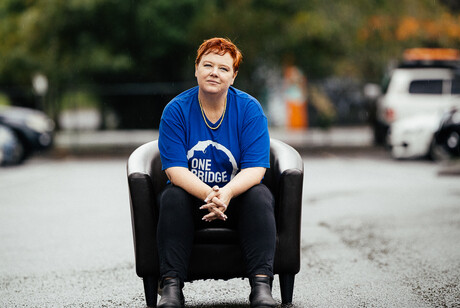
Adjunct Associate Professor Sonia Martin is a Churchill Fellow and the CEO and Founder of OneBridge, a nurse-led social enterprise providing outreach and place-based health care for people experiencing homelessness, at risk of homelessness, or with complex vulnerability. Operating across Queensland and New South Wales, with a growing national focus on health access and equity, OneBridge provides contracted health care for services supporting homelessness, housing groups, and local hospitals by supporting discharges. Here’s a day in her life.
05:00 My day begins early. I walk, swim or sit peacefully and wait for the day to begin. This slow morning gives me space to think clearly before the day begins.
07:30 I begin work. The first part of my day is spent checking in with our Chief Operating Officer and Clinical Lead. Our conversation is focused on: key priorities for the week, workforce and service coverage, team wellbeing, clinical risk or escalation points, and partnership or contract updates.
From there, I meet with our National Partnerships Lead. This work centres on sustainability and growth: nurturing our existing partnerships, designing new collaborative, equity-based models of health care in metro, regional or rural areas of Australia, and identifying opportunities to improve access in under-served communities.
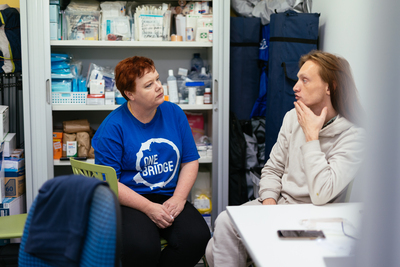
10:00 The middle of the morning is usually devoted to stakeholder engagement. Depending on the day, this may include: hospitals and health services planning discharge and outreach pathways, general practices building continuity of care links, Medicare Mental Health Centres, Urgent Care Centres, transition care providers, community organisations, and social housing precincts.
The conversations are practical: How do we ensure people receive care where they live — wherever that may be? How do we prevent avoidable health deterioration and hospitalisation? Where are the system gaps, and how do we bridge them together?
Because our work sits at the interface of health, housing, and community, partnership is central. No single service can address complex vulnerability. We work in collaboration with each other and the community experiencing homelessness and poverty, not isolation.
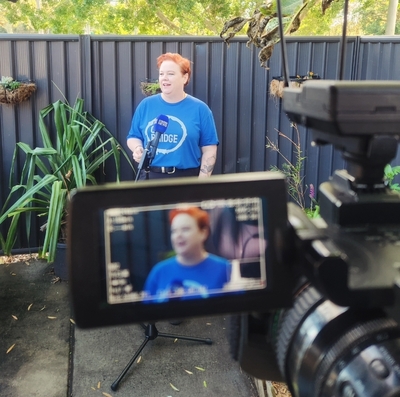
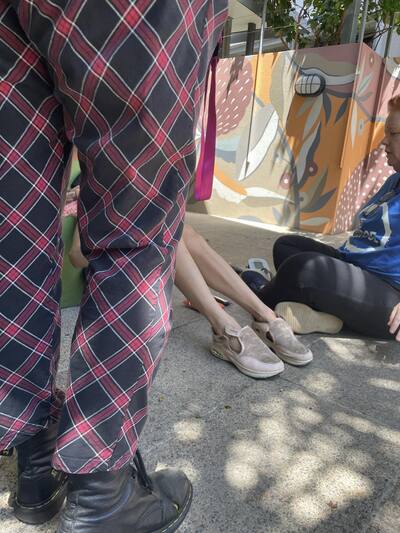
12:00 When I can, I also continue to work clinically in outreach. Today, that means attending a drop-in community space alongside one of our nurses. We have partnered with this local group for years and we have between four and 12 nursing consultations in four hours. The setting is informal — we’re in a carpark sitting in gutters, or standing on the bitumen with community, but the care is clinical practice: wound care, chronic disease support, medication reviews, mental health triaging, care navigation, Hep C testing, skin cancer assessments with our nurse practitioner, telehealth consults, and drug and alcohol support via a harm reduction philosophy. We have a conversation-based model, mixing biomedical and socialised models of health care — relationships and trust matter. Every time. Our clinicians are always working alongside community on their own timeline.
People attending may be using substances. The approach is straightforward. If someone is injecting, we provide: free, clean injecting equipment; vein care and infection control education; naloxone; and plans that work with, not against, the reality of their life. We also assist with referrals into GP care, hospital follow-up, allied health, mental health supports, and housing contacts.
The clinical work informs the strategic work. It shows where systems are functioning and where they are not.
14:00 In the afternoon, I often shift into advocacy and sector development. I chair the Street Health Faculty with the Australian College of Nursing, the first national body focused on nurses working in homelessness and inclusion health. The role involves: supporting nurses across Australia delivering outreach care, developing shared practice language, identifying systemic issues, communicating these issues into policy forums, and advocating for funding models that recognise nurse-led outreach as core health service delivery.
This advocacy is grounded in the principle that health care should be accessible without needing an appointment, an address, or the ability to navigate complex systems.
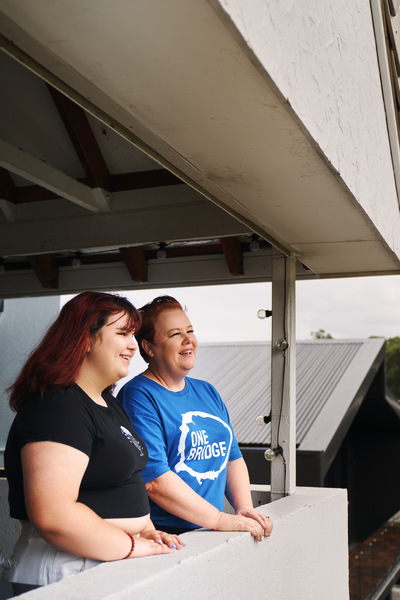
15:30 Later in the day, I move into strategic planning and partnership documentation: proposal development, program design, briefing notes, or reviewing data insights. This is the slower work that supports long-term service stability. As a consultant, I continue to work on and offer education and support to health or community groups implementing equity informed care strategies through teaching The MartMolly Method; an equity-informed framework for clinicians.
17:00 By late afternoon, I wrap up and close the workday. Leading a health service in this space requires presence, consistency, and clear direction — and of course, time away from the workspace.
My role spans: strategic and culture-based leadership, system partnership, health equity advocacy and education provision, and maintaining direct clinical practice and monitoring governance.
Keeping one foot in clinical practice ensures the system work stays anchored in reality. It also reinforces the central purpose, my ‘why’: health care must be reachable by the people who need it most. This is part of the equity puzzle, we as health leaders, can solve together.
A Day in the Life of a birth suite ANUM
Originally trained in the UK, midwife Esther Chikwanha moved to Australia in late 2019 and...
Mandatory VR violence training for nursing students
UTS, in partnership with a Sydney-based immersive learning company, plans to make aggression and...
Unlocking the potential of our nursing workforce
Australian College of Nursing Acting CEO Dr Zachary Byfield outlines how nurses and current...