Chemical-free cleaning: the future of infection control in health care
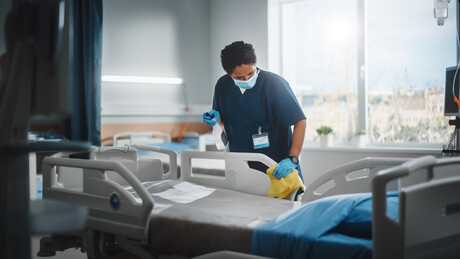
For hospitals and healthcare facilities, cleaning is a patient-safety issue with evolving health, safety, sustainability and environmental standards.
Healthcare organisations are under growing pressure to deliver safe, clean environments, not just for compliance, but as a direct extension of clinical care. From operating theatres and ICUs to aged care facilities and outpatient waiting rooms, the cleanliness of a healthcare environment is no longer a back-of-house concern. It is a patient-safety issue. And yet, the way many organisations approach cleaning has not kept pace with the clinical risks they face.
The infection risk hiding in plain sight
Healthcare-associated infections remain one of the most persistent and preventable risks in clinical settings. Vulnerable patients — the elderly, immunocompromised and post-operative patients — are disproportionately exposed to pathogens that survive on surfaces for hours, sometimes days. While hand hygiene has received significant attention, environmental hygiene such as cleaning and disinfecting surfaces, equipment and shared spaces remains an underappreciated route of infection transmission.
The challenge is compounded by what happens between professional cleans. In high-traffic healthcare environments, surfaces are constantly being retouched and contaminated. Without clear protocols for interim cleaning and staff education around maintaining hygiene standards, even the most rigorous professional cleaning program has gaps.
Antimicrobial resistance
For years, many facilities have relied on chemical-heavy solutions to achieve required disinfection standards. As the overuse of disinfectant chemicals comes under scrutiny due to their impact on antimicrobial resistance, patient health, staff wellbeing and environmental safety, the industry is being asked to find solutions that are equally effective without the associated risks.
A new generation of chemical-free technologies is answering the call. Ultraviolet irradiation and steam vapour systems are gaining traction across healthcare settings — all non-toxic, low in water consumption and free from the harmful residues of traditional disinfectants. Activated water technology, which is a cleaning solution generated through an innovative electrolytic process that eliminates soils and bacteria without a single harsh chemical, has gone further still; deploying it reduces VOC exposure for staff and patients alike, and it reverts completely back to water after use.
However, innovation needs to be matched with rigour. Before introducing any emerging cleaning technology, healthcare organisations need to carefully weigh its clinical appropriateness against their specific environment, such as the vulnerability of their patient population, the complexity of their existing infection prevention program and any gaps in their current cleaning practices. Emerging technologies should complement disinfection cleaning, not replace it.
While the evidence for their effectiveness is growing, many come with significant cost implications, potential safety considerations and the need for dedicated staff training. The goal is not to chase the newest solution but simply to find the safest and most effective one.
Cleaning as a clinical priority
If healthcare organisations treat cleaning simply as a facilities management function, they risk overlooking its direct clinical implications, as it quickly becomes harmful to patients. This requires a shift in how cleaning is governed, resourced and integrated into broader infection prevention strategies. Cleaning teams need specialised training, clear escalation protocols and access to the most effective and safest products available.
They also need to be recognised as part of the clinical care team — not separate from it. Best practice would suggest that the cleaning department utilises a system which gives clear structure, process guidance, workplace health and safety information, checklists and historical data to maintain hygiene and safety levels within a healthcare environment.
Waste management
Effective cleaning is only half the equation. What happens to the waste generated, including how it is handled, sorted and disposed of, is an equally critical and often overlooked dimension of safe, sustainable healthcare environments. Not only does waste mismanagement create compliance risk, but it creates unnecessary environmental harm.
When waste streams are incorrectly segregated, recyclable and organic material ends up in landfill, clinical waste is mishandled, and the environmental footprint of an already resource-intensive sector grows larger. The opportunity to divert waste, reduce landfill contributions and close the loop on organic and recyclable materials is significant, but only if the people managing it know what they’re doing.
Training is the cornerstone of getting this right. In healthcare settings, cleaners, clinical staff and facilities teams all need a shared understanding of waste classification and disposal, as a genuine commitment to patient safety and sustainability. In commercial and residential settings, the same principle applies: educated tenants and building occupants are one of the most practical and cost-effective levers available for reducing landfill and improving environmental outcomes.
On the ground, the detail matters. Colour-coded cleaning tools eliminate cross-contamination between zones, ensuring equipment used in a general ward never finds its way into a high-risk ICU, and the adoption of fresh PPE. High-risk areas demand greater cleaning frequency, dedicated tools and heightened vigilance, and the teams responsible for maintaining them need to understand not just the how, but the why.
Structured checklists, sign-off logs and regular audits ensure protocols are followed consistently, because in healthcare environments, consistency is an absolute patient-safety requirement. The most impactful waste programs are built not on signage alone, but on consistent education, clear accountability and regular auditing turning the right behaviours into everyday practice.
**************************************************
What best practice looks like
Healthcare organisations serious about environmental hygiene should consider:
- An internal operating system that offers process, controls and validation data
- Implementing chemical-free or low-chemical cleaning protocols validated for clinical settings, such as activated water solutions that eliminate VOC exposure and chemical waste
- Ensuring all other disinfectants are TGA-approved as a minimum standard
- Establishing clear interim cleaning procedures for high-touch surfaces between professional cleans
- Deploying colour-coded tools and zone-based systems to eliminate cross-contamination
- Investing in staff training that bridges cleaning practice, waste management and infection control
- Auditing cleaning outcomes regularly, with metrics tied to infection prevention, and records to evidence compliance and sustainability KPIs
- Partnering with cleaning providers with demonstrated, specialised experience in healthcare environments
**************************************************
As infection risks evolve and chemical bans reshape standard practice, safe, regulated and environmental hygiene deserves a permanent place at the clinical leadership table. The future of health care isn’t just built in operating theatres and research labs. It’s built in the daily discipline of a clean environment, and the leaders who understand that, will be the ones who get it right.

Top 4 lessons from an ICAC NSW Health employee investigation
The NSW corruption watchdog said this investigation highlights recruitment, procurement,...
A new national approach to clinical governance
The Commission's Gillian Giles and clinical governance expert Dr Cathy Balding explain what...
Tapping into the labour mobility market to fill ongoing workforce gaps
Health and aged care is under pressure to deliver high-quality care with short-staffed teams....