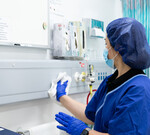
Coronavirus: food safety tips to live by

With the increase in coronavirus cases around the country, managers of foodservice operations should take steps to reduce the spread of infection and contamination risks.
Apply these quick food safety tips for success:
- Inform food handlers the virus can live on surfaces from a few hours to several days.
- It is better for food handlers to phone in sick rather than arriving at work and then advising they are not feeling well.
- Advise your food handlers not to touch their face. The most common transmission is droplet infection. When a food handler touches a contaminated surface and then they touch their mouth, nose or eyes, it allows the virus to enter.
- There is NO evidence that coronavirus can be transmitted through food.
- In foodservice operations where customers can handle cutlery, ladles and tongs on food at self-serve salad bars and the like, these should either be removed or continuously changed.
- Handwashing with soap and warm water is much better than simply using a hand sanitiser.
- Managers and supervisors should lead by example by ‘talking up’ the importance of handwashing and good personal hygiene practices to food handlers.
- Remind food handlers of their health and hygiene responsibilities.
- Ask your chemical supplier to provide regular deliveries of liquid soap.
- Check the sanitising temperature of your dishwasher. It should be set at greater than 80°C.
- Make sure all work surfaces have been cleaned and sanitised. There should be no build-up of grease, grime or food particles.
- Make regular checks on standards of cleaning.
Originally published here.
Related Articles
Could this eco-friendly antimicrobial coating curb healthcare-associated infections?
The coating, made from Queensland agricultural waste, is part of a two-year trial in the ICU of...
Preserving paediatric data beyond the point of care
A clinician-led, research-driven program for the care of babies and children seeks to securely...
Nurse-led infection control training program
A healthcare protective solutions supplier has targeted infection prevention gaps in hospitals...